
Anaesthesia Museum
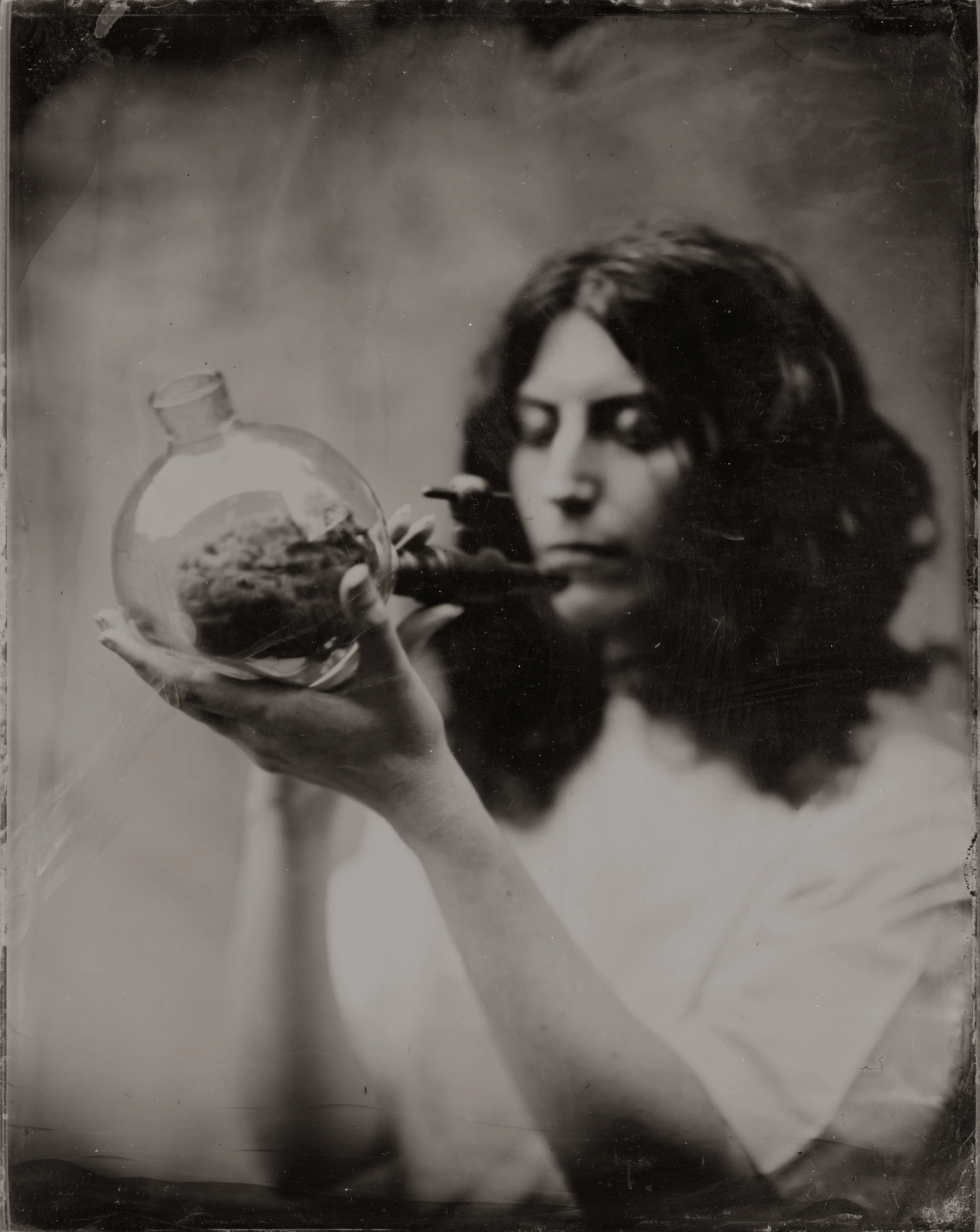
This collaboration with the Anaesthesia Museum explores the shared histories of photography, medicine and scientific innovation through ether—a substance used in early anaesthesia and also a key component of the nineteenth-century wet collodion photographic process.
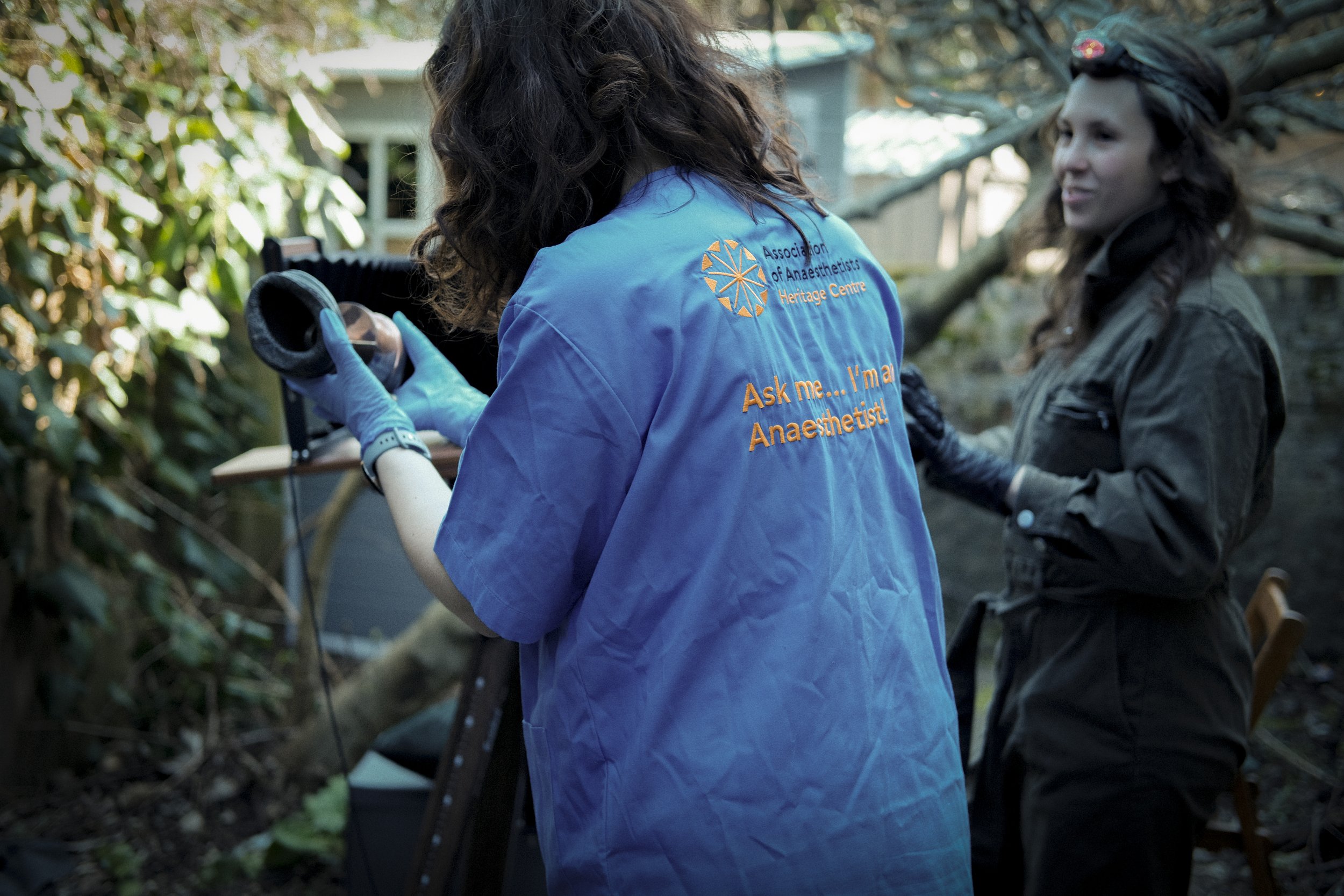
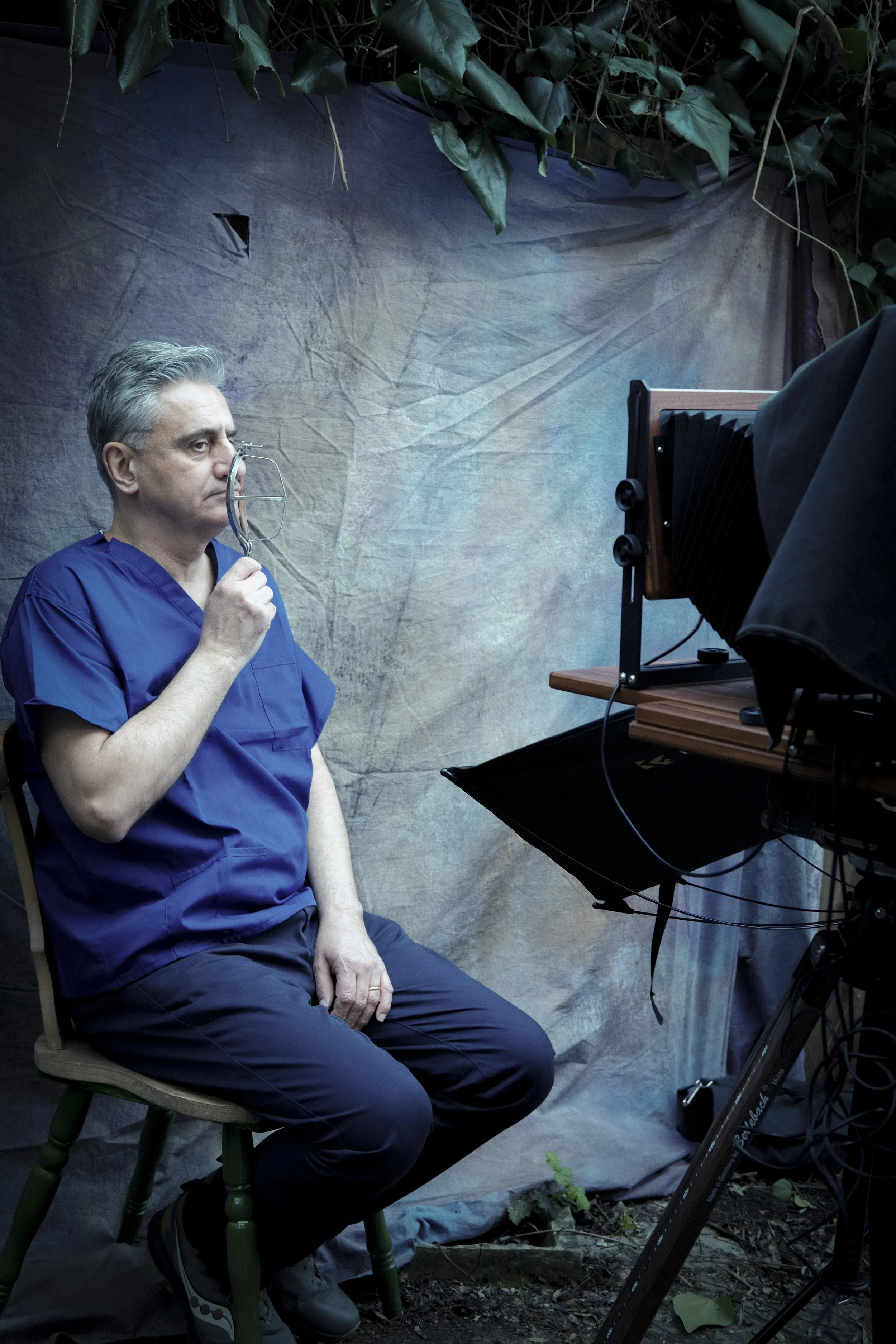
Working closely with the Museum’s collection, I photographed anaesthetists, trustees and other people connected to the institution on glass plates alongside historic medical artefacts. The project brought contemporary practitioners into direct dialogue with the objects and histories of their profession.
The slow and highly involved wet collodion process became especially relevant to the subject. Each plate required preparation, concentration and collaboration between photographer and sitter. The resulting images captured this encounter through chemical marks, imperfections and the reflective surface of silver on glass. Historic photographic technique therefore became a way of thinking about specialist knowledge, trust and the often-invisible work involved in caring for another person.
The project also considered the state of “going under” anaesthesia—moving between awareness and absence, control and surrender. Rather than illustrating this experience, I used the conversations with anaesthetists as well as atmosphere and material qualities of the photographs to create a sense of suspended time, allowing historical objects and contemporary faces to occupy the same visual space.
The Anaesthesia Museum collaboration demonstrates my experience of working sensitively with specialist collections and medical professionals. It reflects my approach to archive-led practice: beginning with detailed material research, listening to the knowledge held by museum staff and participants, and using historical processes to create new visual connections between past and present. It also shows how collection objects can prompt contemporary storytelling and encourage people connected to an institution to see themselves as part of its continuing history.
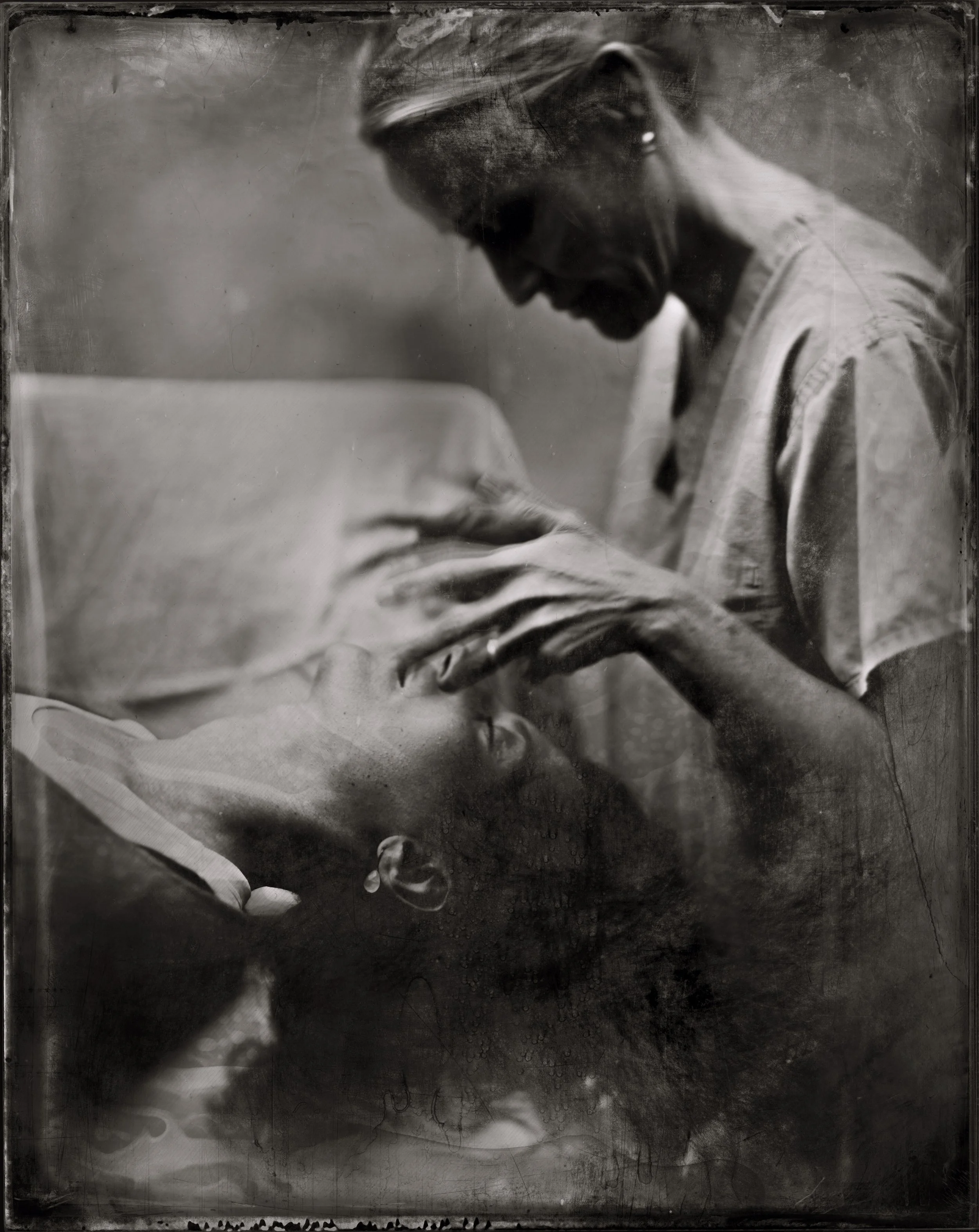
Limbo, in collaboration with the Anaesthesia Museum, 2026, wet collodion plate, 20,3x25,3cm
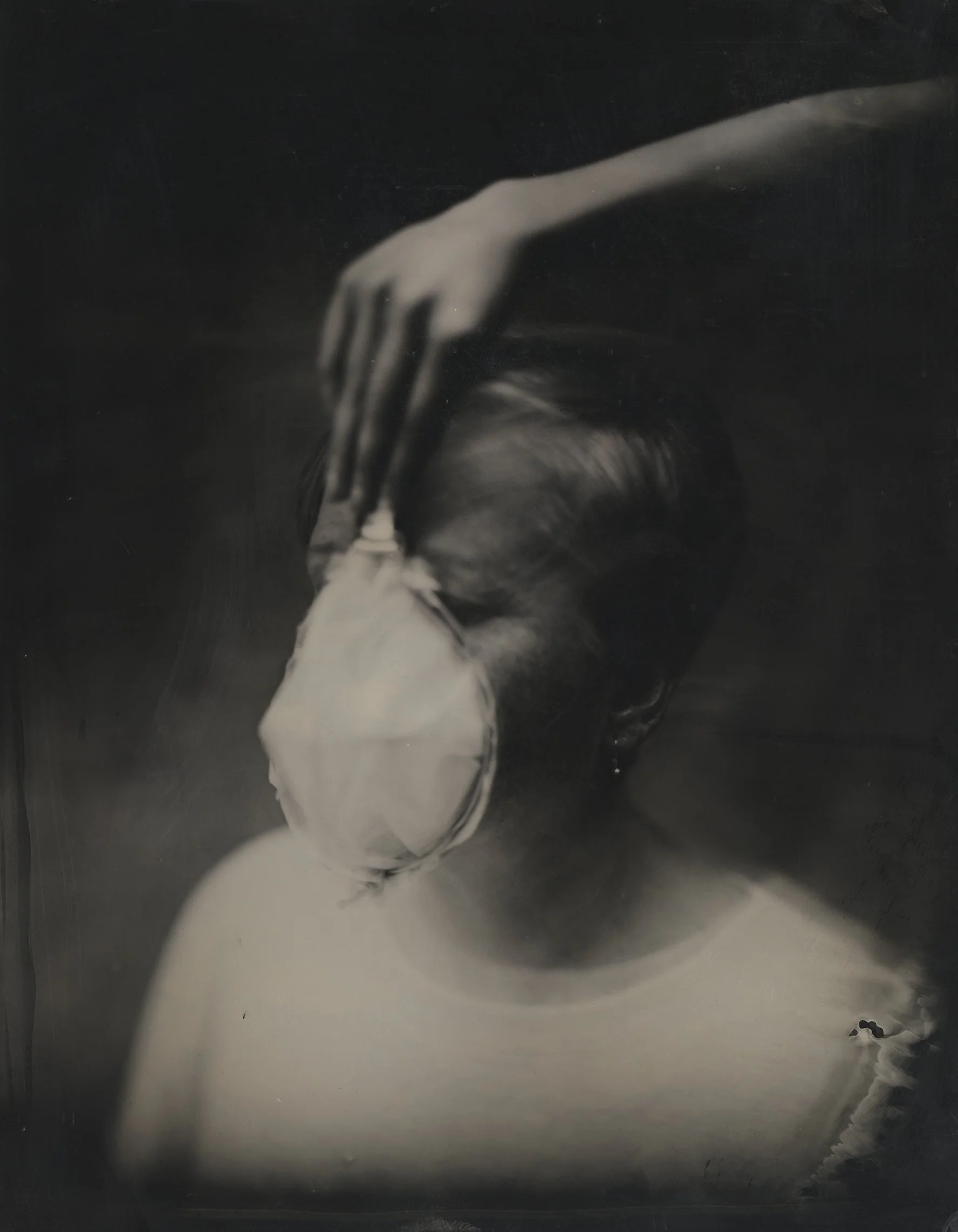
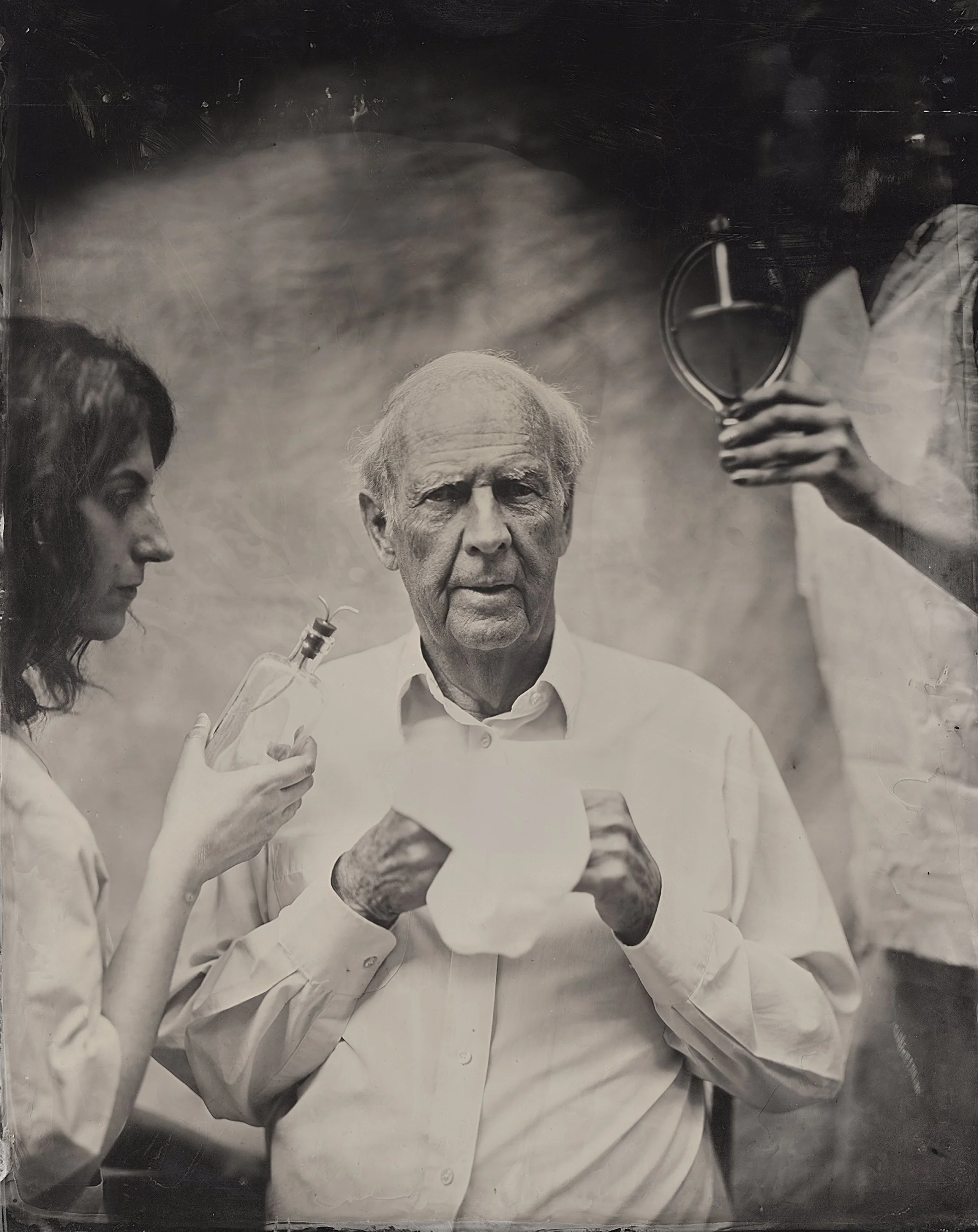
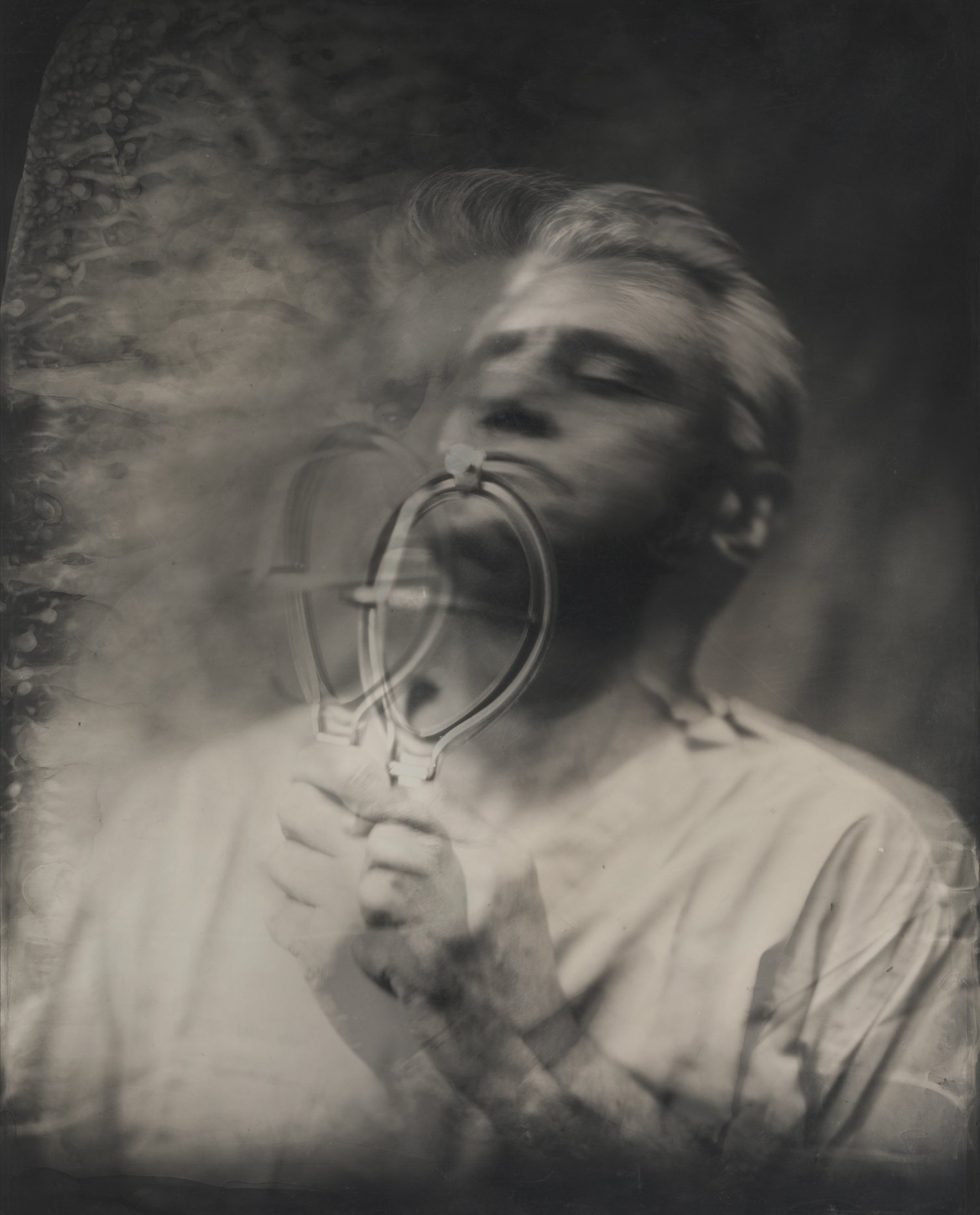
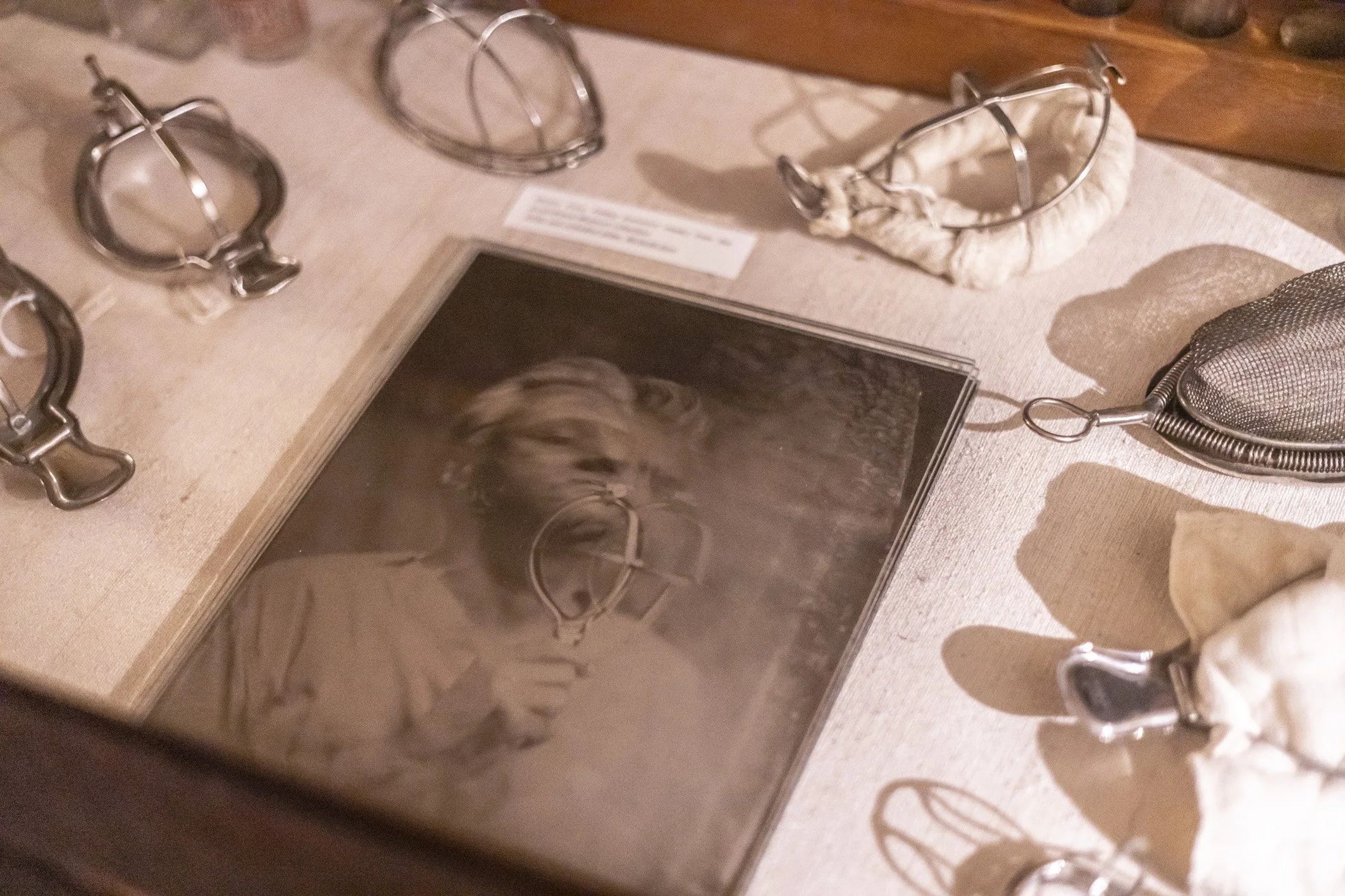
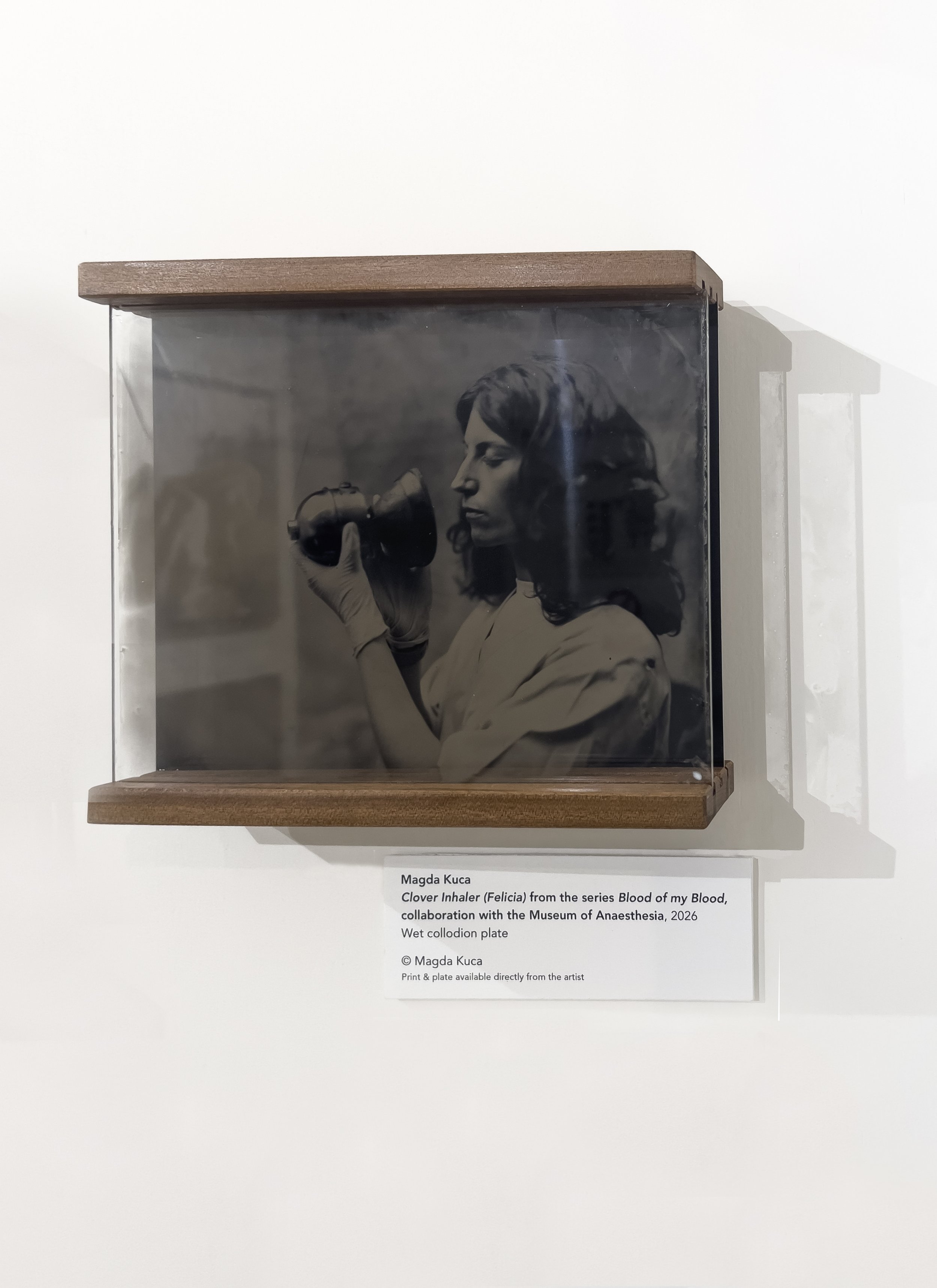
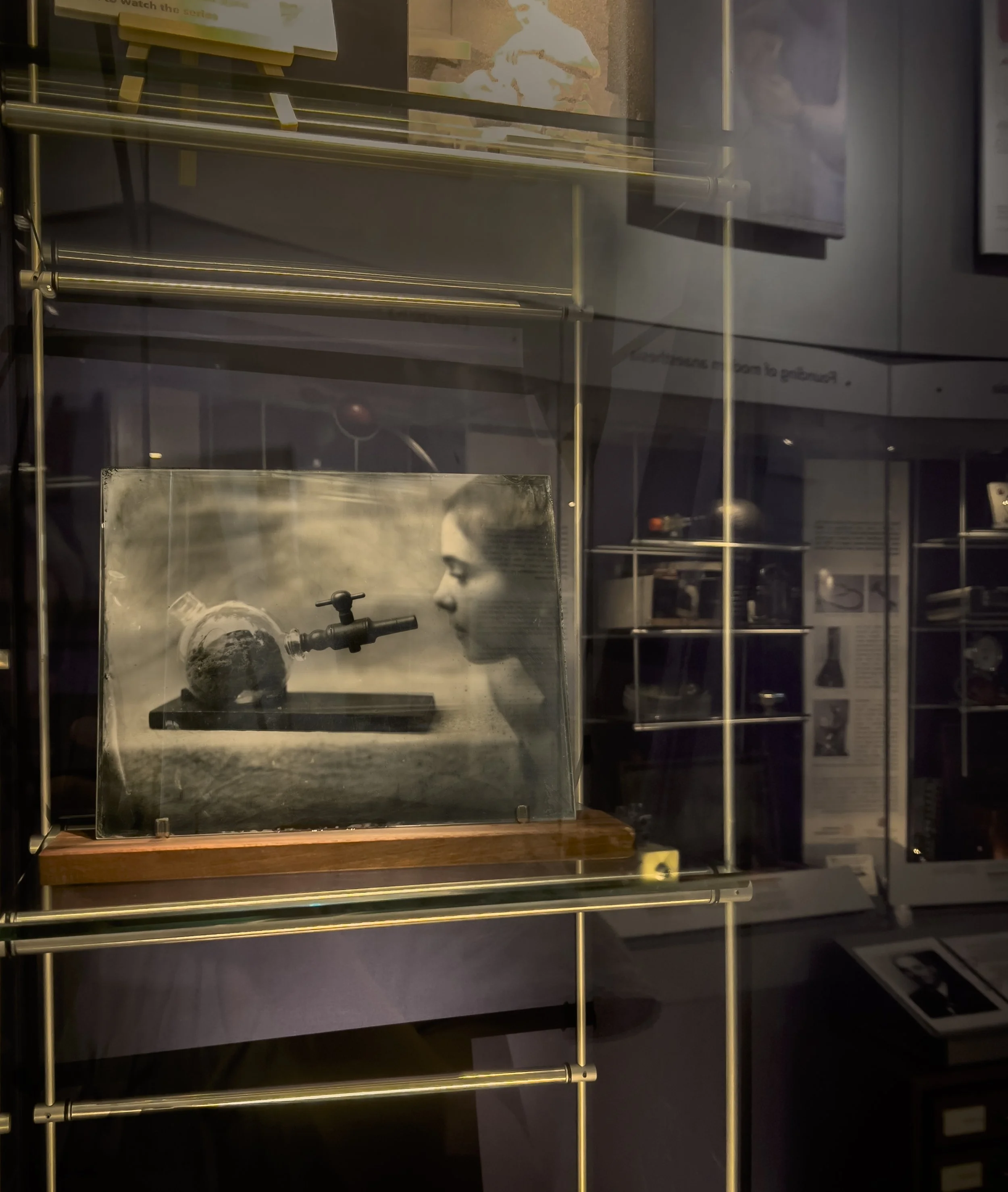
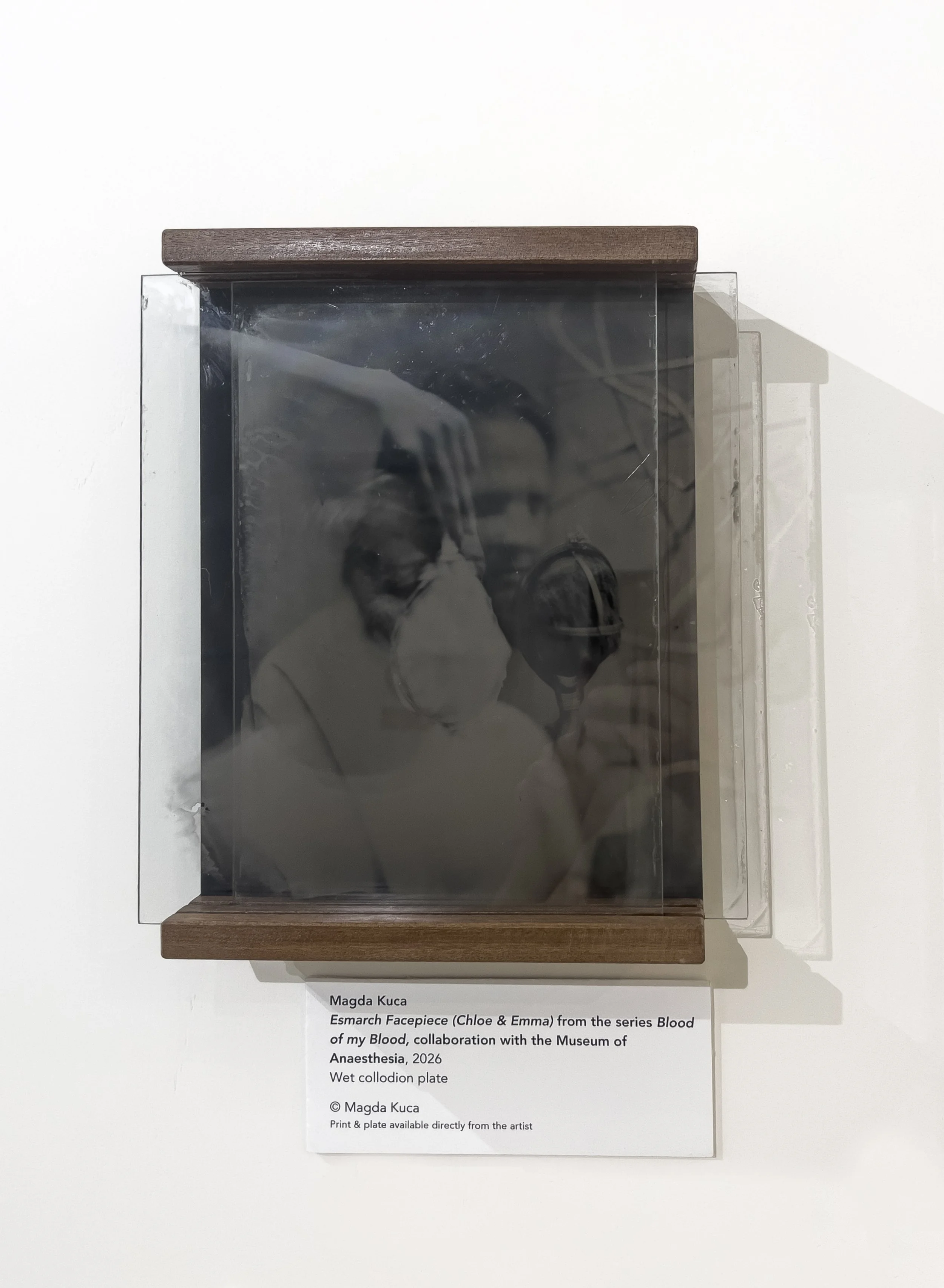
On display at Anaesthesia Museum until April 2027
Behind the scenes
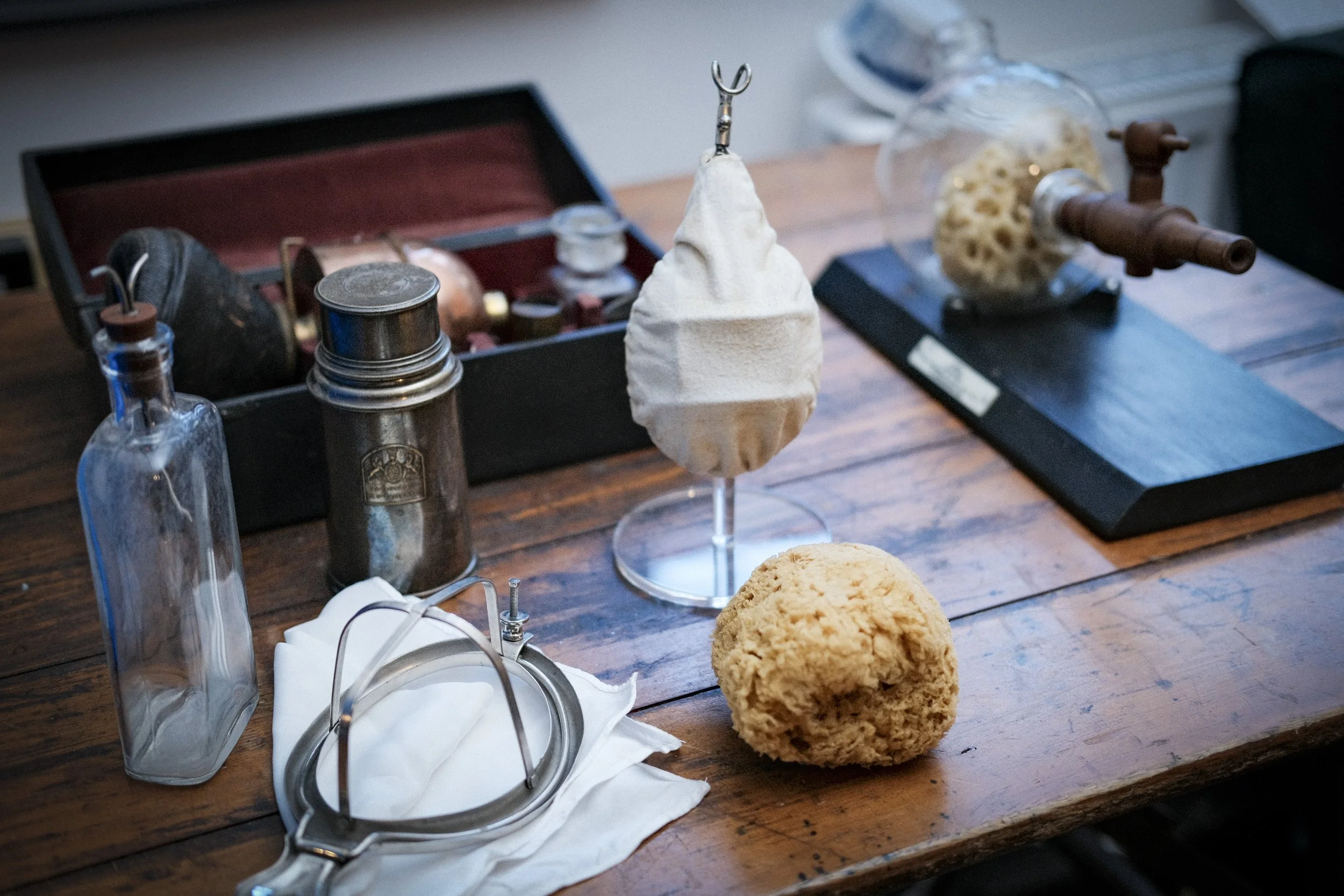
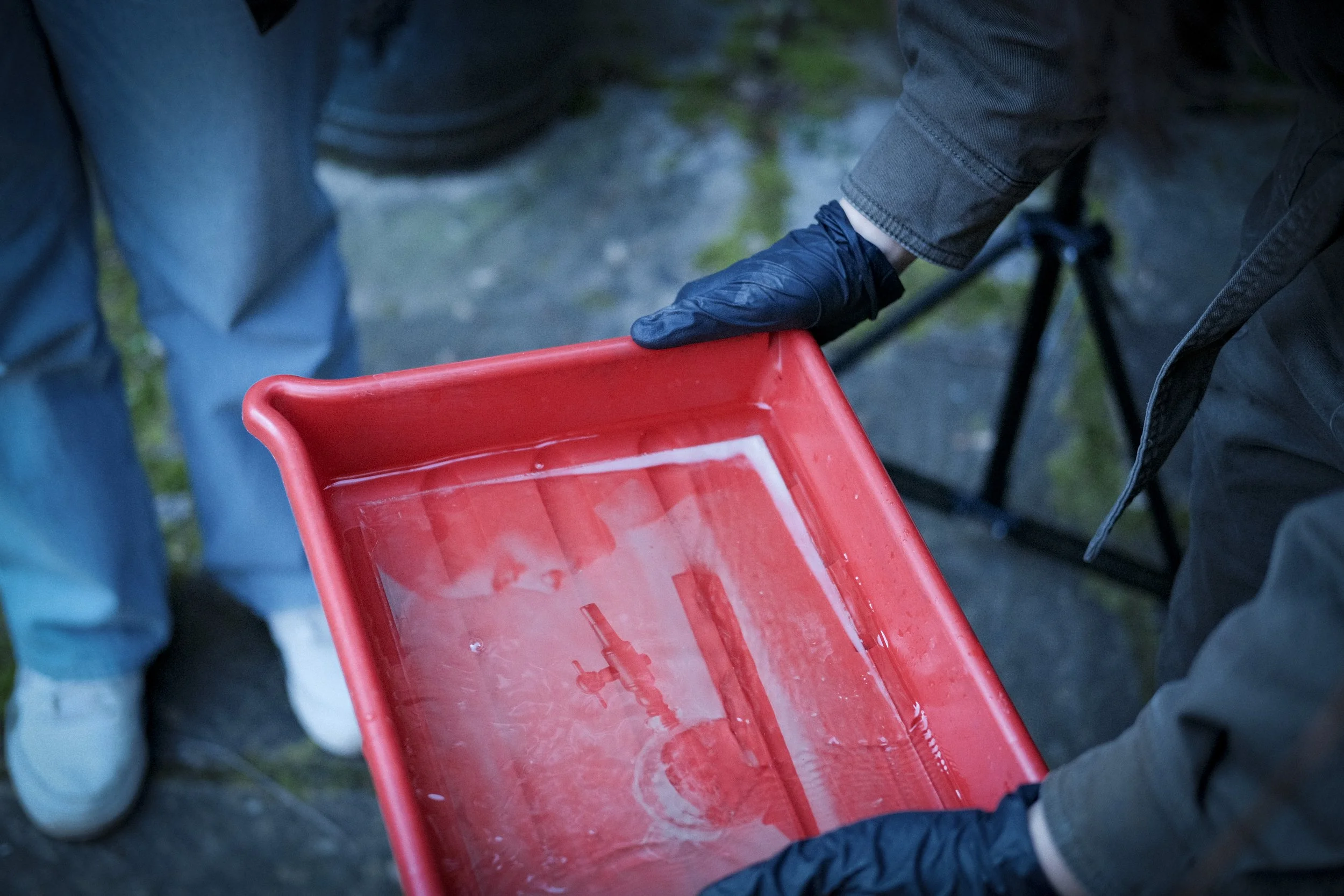
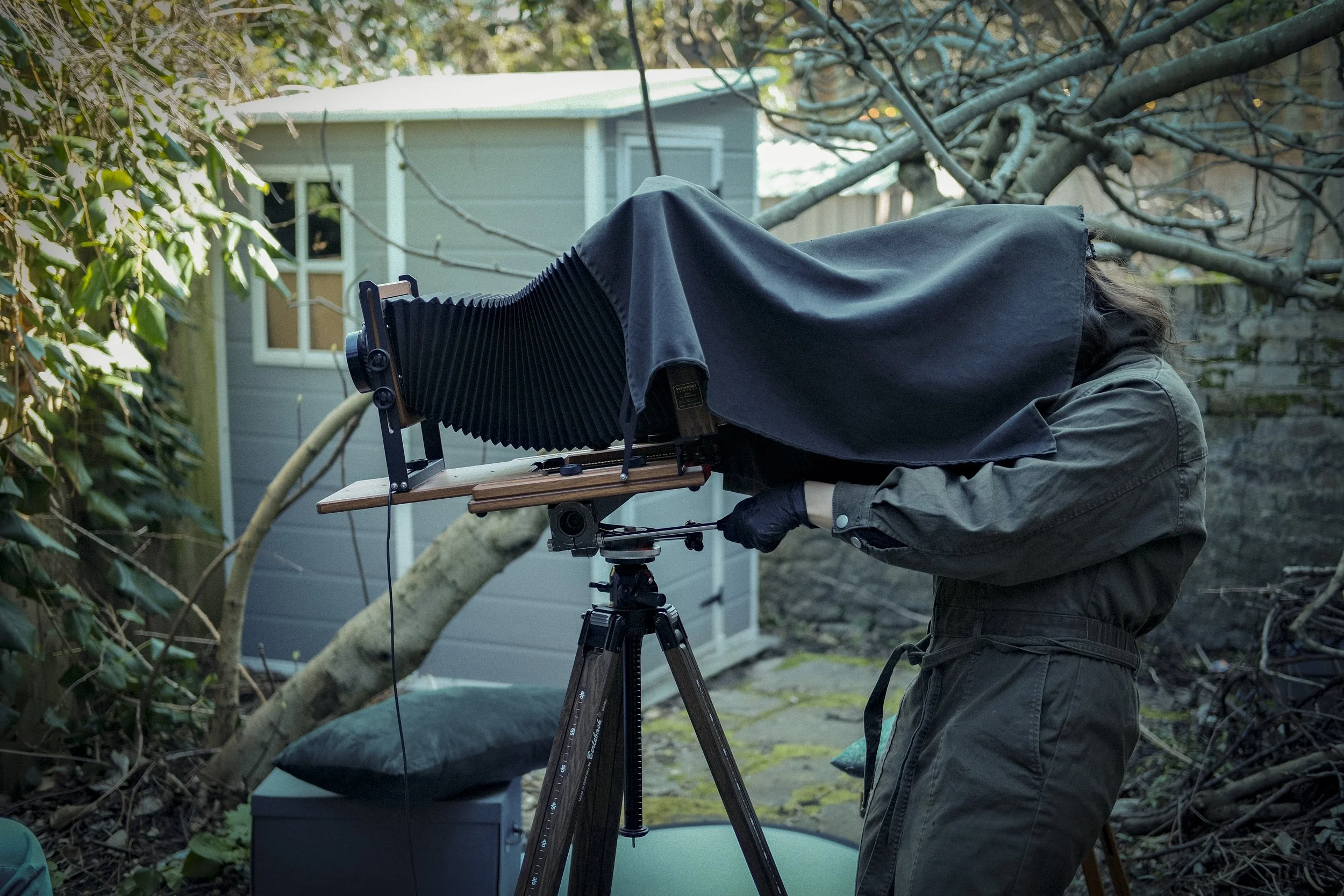
Project was supported by Centre for British Photography Realisation Grant
Museum of Anaesthesia
The accredited Museum of Anaesthesia tells the remarkable story of anaesthesia, from its first public demonstration in 1846 to modern day anaesthetists working in the aftermath of wars and terrorist attacks. The Museum, rare book collection and archive are a unique resource for both curious visitors and specialist researchers.
The museum grew out of A. Charles King’s private collection of historic anaesthetic apparatus, which he donated to the Association of Anaesthetists in 1953. The collection has since grown to include nearly 5,000 objects, 1,000 archive documents and 7,000 library items. Objects span the entire history of the profession and tell the story of modern anaesthesia from its earliest beginnings in the 1840s, to technological advancements, and its use in war and childbirth.
The museum has a permanent and a temporary display, as well as pull-out drawers and flip books containing biographies and details of large anaesthetic machines. The collections give an insight into the history of anaesthesia, resuscitation and pain relief.