
Old Operating Theatre
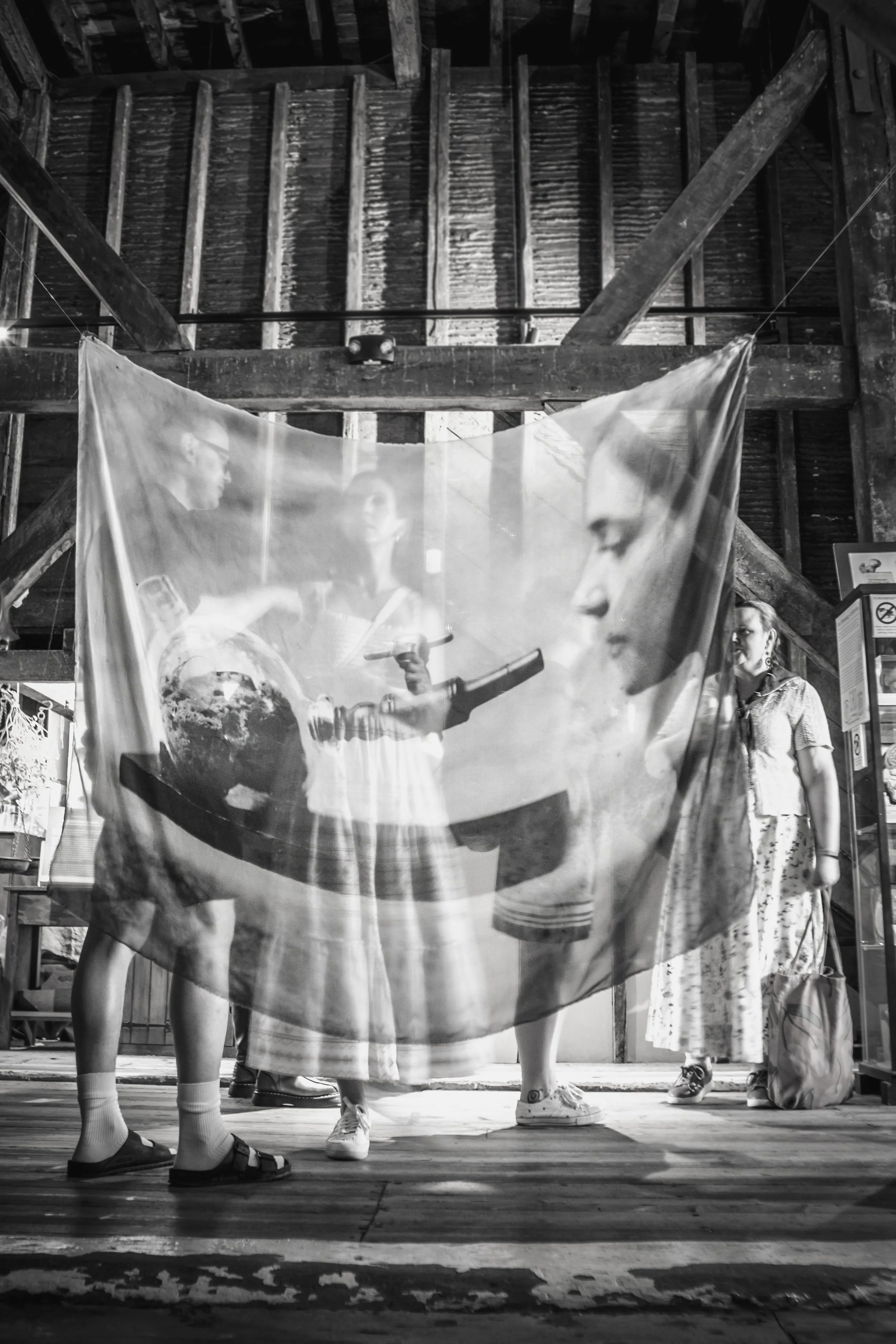
On the photograph at the entrance to the museum is a morton inhaler-used when administering anaesthesia for the first time, an item from the museum’s collection and a direct link to the photographic process of wet collodion
Blood of My Blood is a multi-layered project exploring the shared histories of photography, medicine and care through the nineteenth-century wet collodion process. Beginning with my family’s experience of medical knowledge and treatment, the work moves between personal memory and wider histories of scientific development, asking how images can record, interpret and pass knowledge from one generation to another.
The project connects the darkroom with the clinic through materials common to both fields. Ether was used as an early anaesthetic and remains a key solvent in wet collodion photography, while silver nitrate has histories within both photographic image-making and antiseptic treatment. These connections allowed me to consider photography and medicine as parallel practices: both require close observation, specialist knowledge, patience and an understanding that small details can carry great significance.
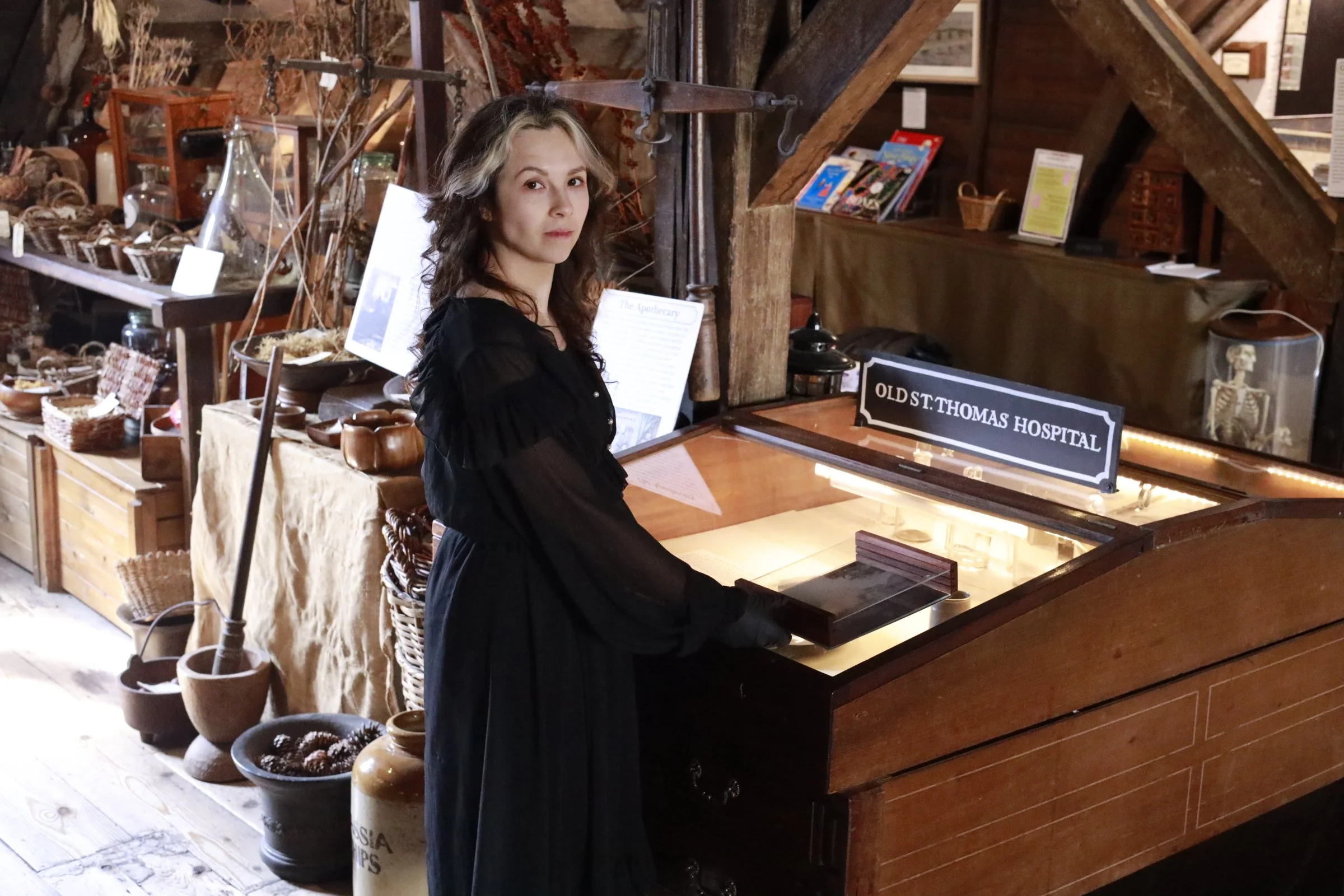
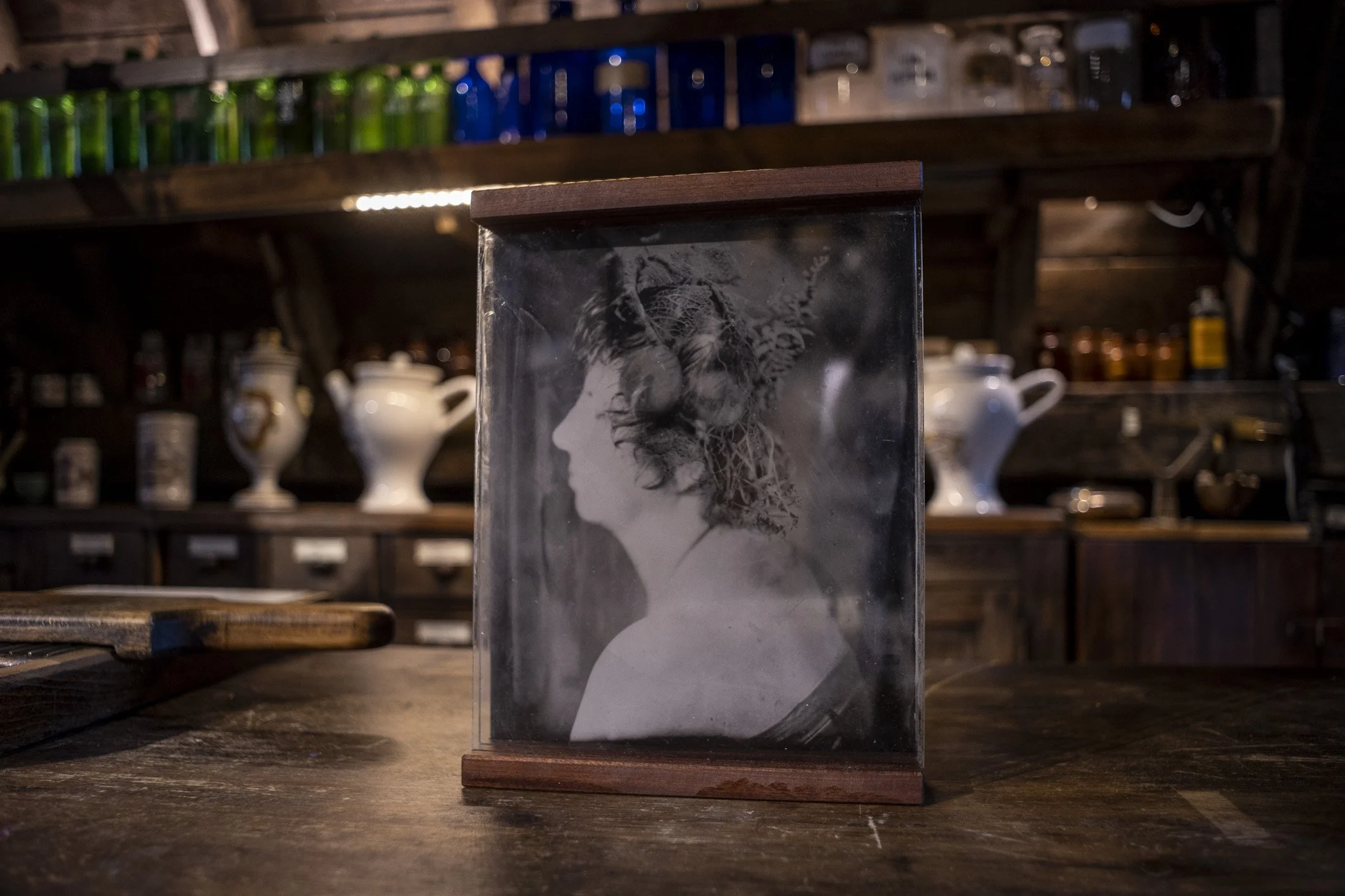
Across photographs, prints, objects and installations, I use historical processes to bring it into conversation with contemporary experience. Glass photographs, images made on surgical-grade steel, experimental prints and photographic instruments are presented alongside medical objects and museum displays. Some surfaces are allowed to tarnish and transform over time, while fractured plates are repaired using reclaimed silver. The process of making, changing and repairing becomes part of the story.
The work also considers the importance of touch, gesture and practical knowledge. Hands appear throughout the project as instruments of care, work and communication—preparing materials, operating equipment, supporting another person and passing skills onwards. These gestures connect individual experience with larger histories of medicine and public service.
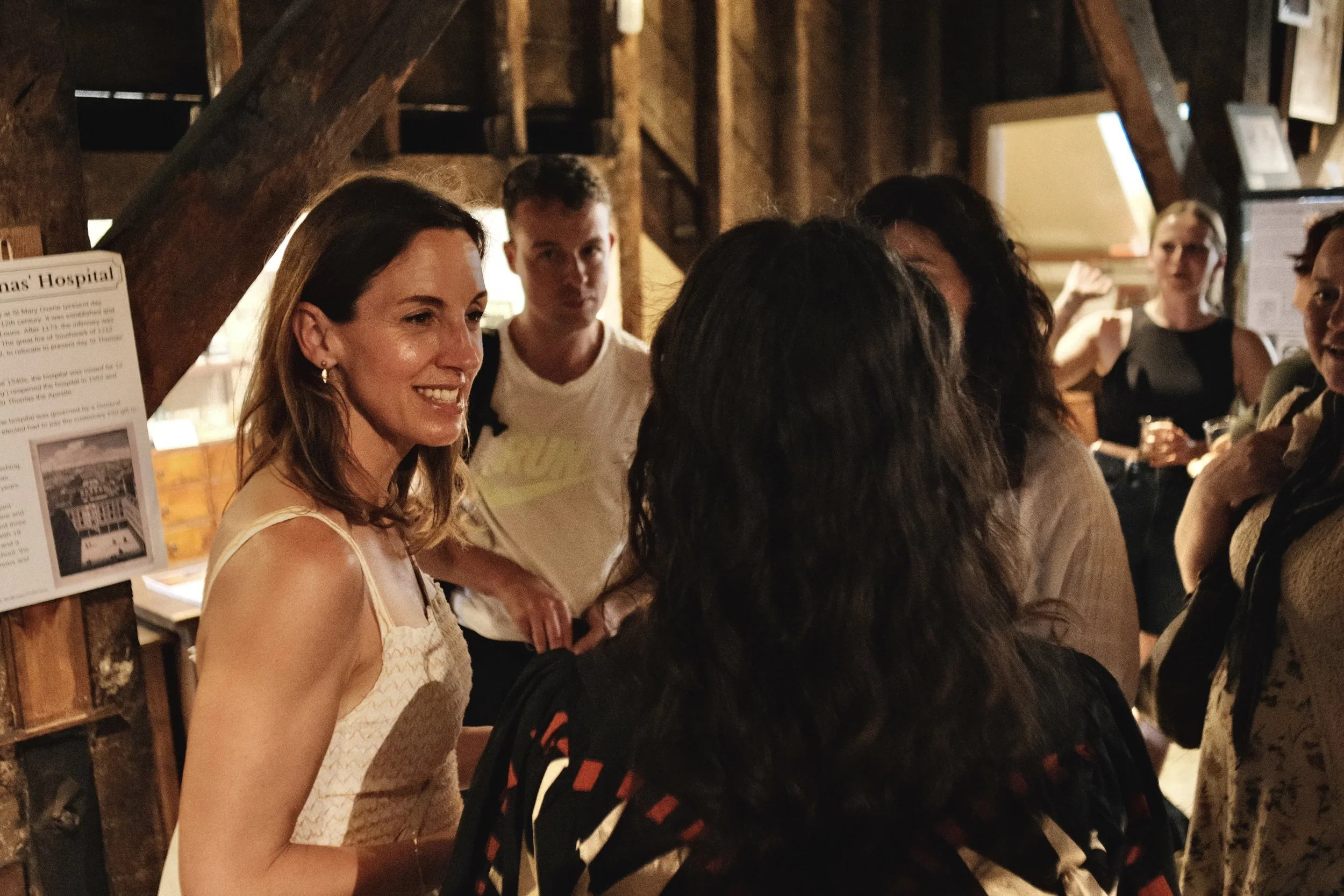
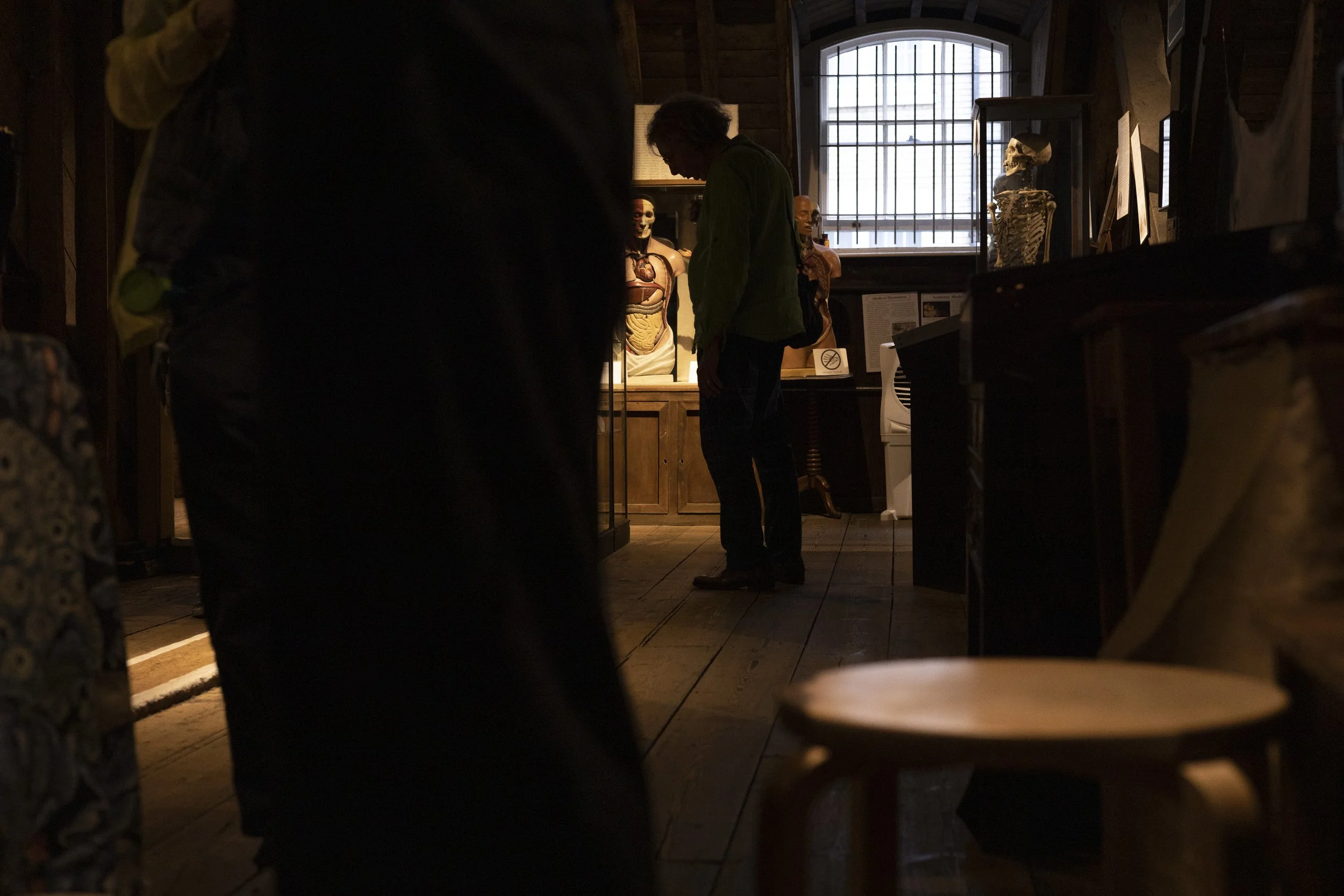
Presented within the Old Operating Theatre Museum, the project created a dialogue between contemporary artworks, historic architecture and the Museum’s permanent collection. Rather than using the collection as a background, I responded closely to its instruments, documents and atmosphere, allowing older objects to guide the development and presentation of new work. Moving-image and experimental photographic elements extended this conversation beyond the static display.
Blood of My Blood demonstrates my approach to archive-led practice: beginning with detailed historical and material research, while keeping human experience, care and shared knowledge at the centre. I am interested in how museum collections can become active resources—prompting new images, questions and forms of storytelling—and how historical processes can be translated into contemporary visual language without losing their material character.
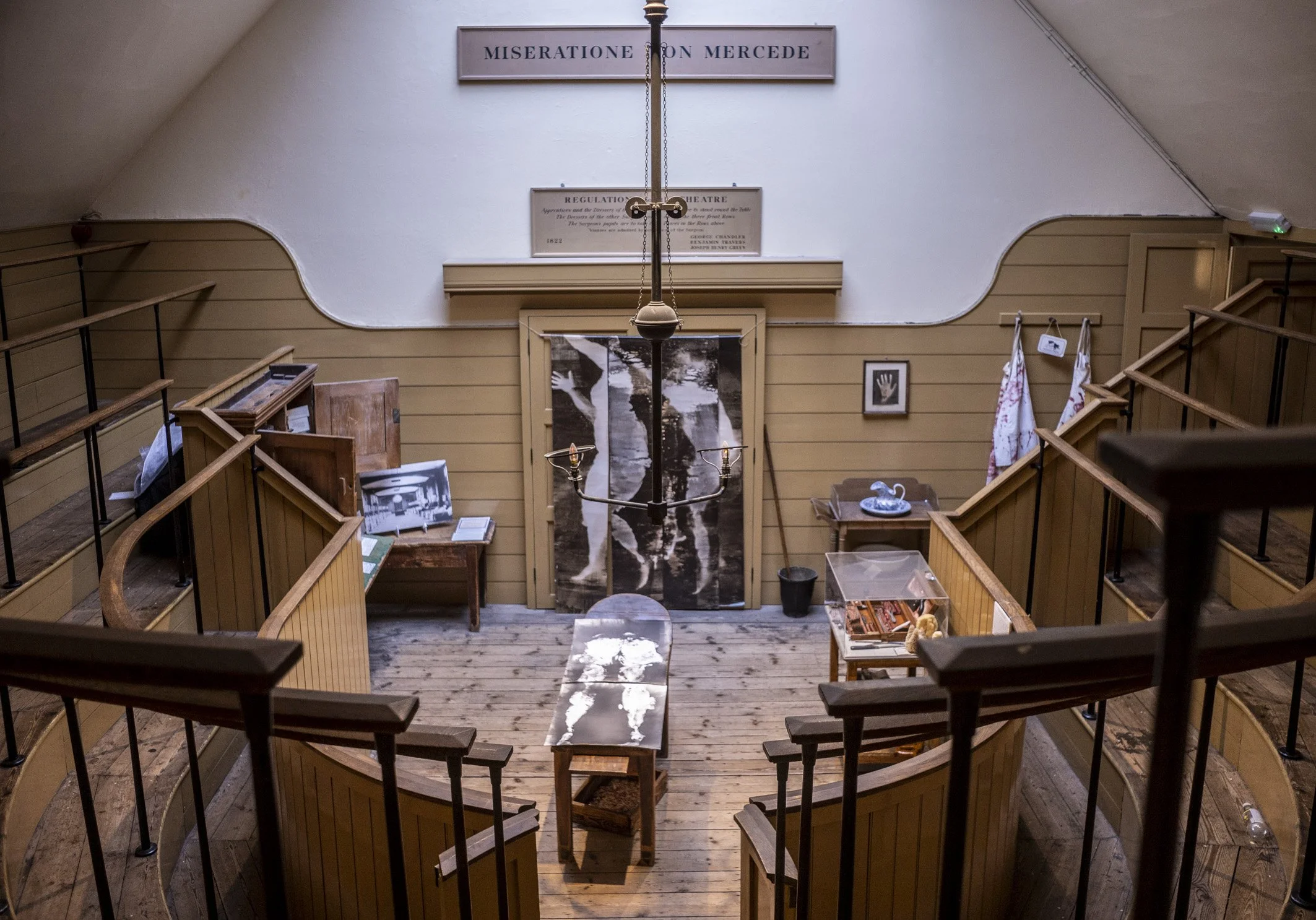
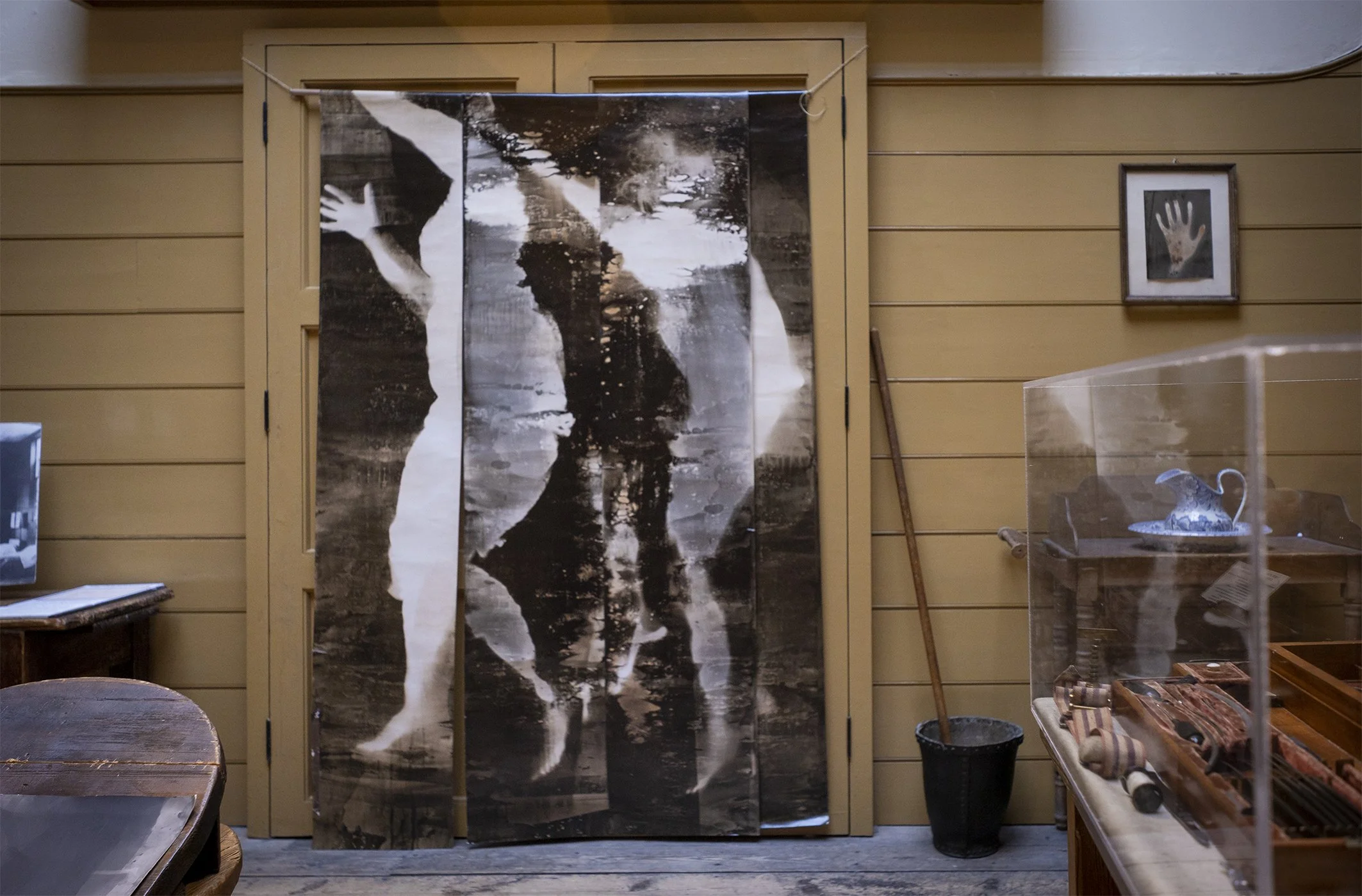
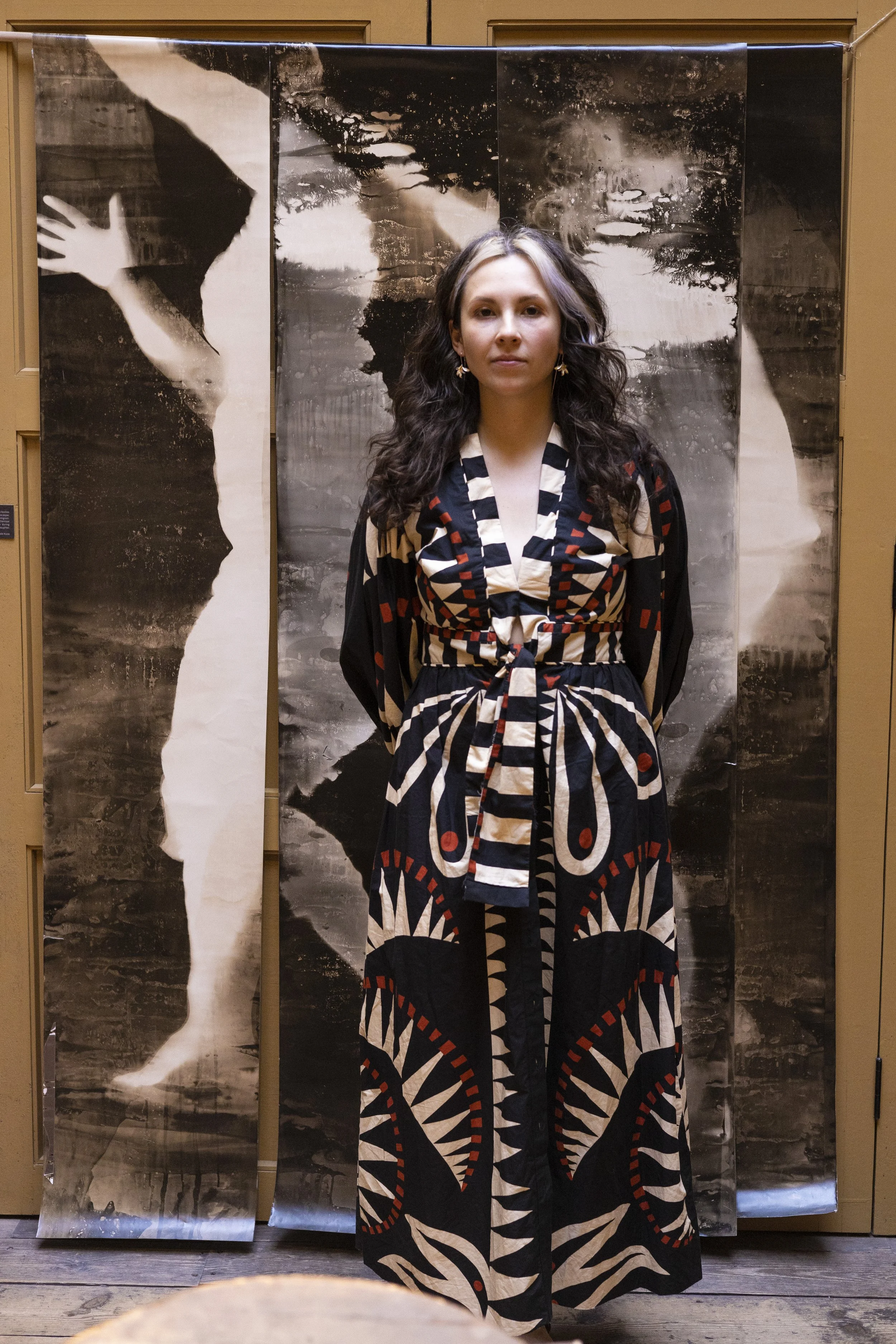
Chemigrams on photographic paper made through direct contact with my mother’s and my own body. The works are created using photographic chem istry, where what is inside the body becomes visible on the surface. The process leaves traces, burns, and chemical imprints, turning the paper into both a site of touch and a record of shared vulnerability.
chemigram on silver gelatine paper, 120x200cm
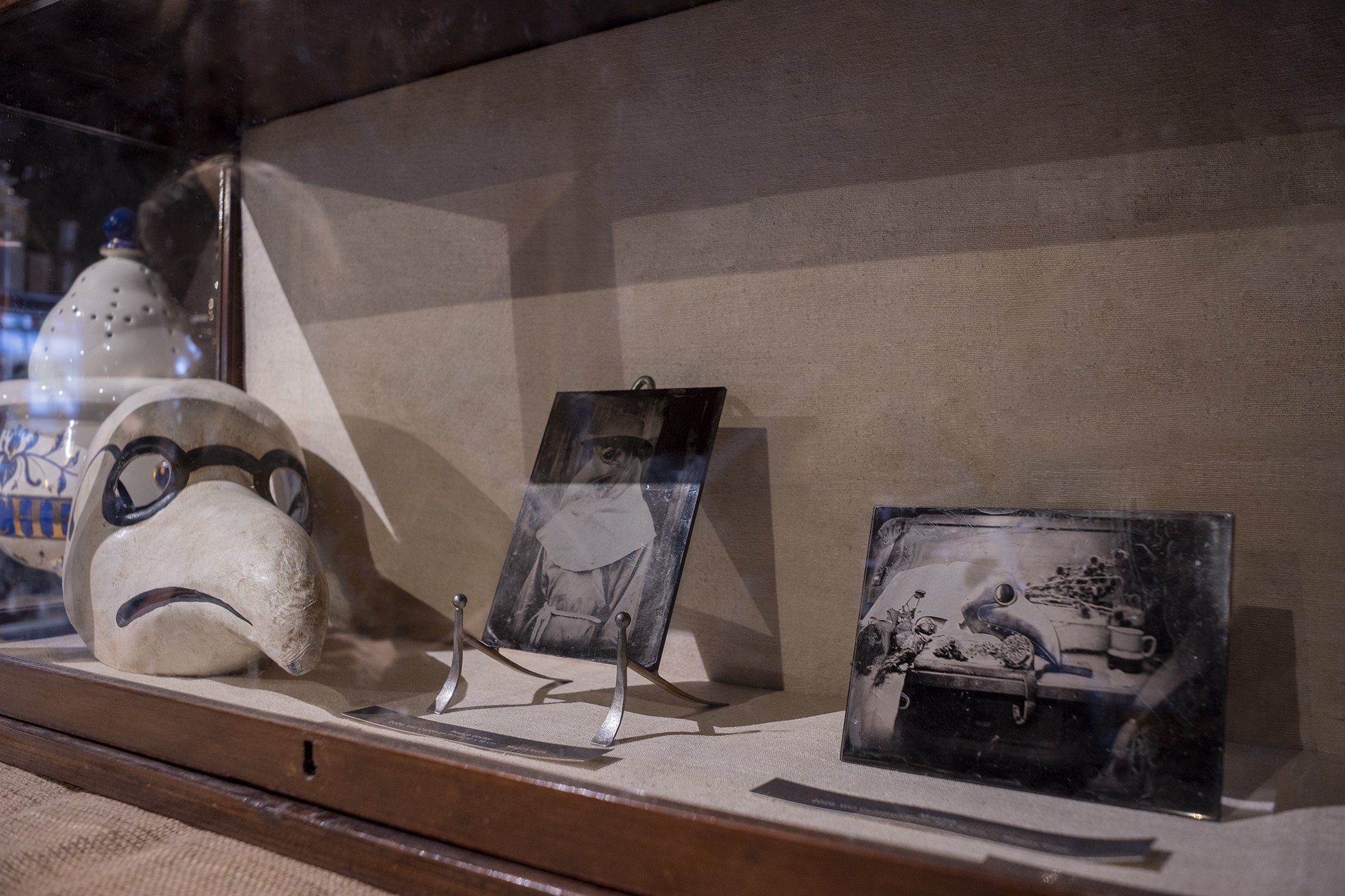
Still Life Miasma refers to the idea that diseases are transmitted by an unpleasant, pestilential air - a poisonous vapor that couldbe combatted with the help of the life-savingaromas of herbs and spices. Oranges studded with cloves and vinegar soaked sponge were commonly used remedies during the Great Plague of London.
Miasma, 2020, wet collodion plate, 12x16 cm
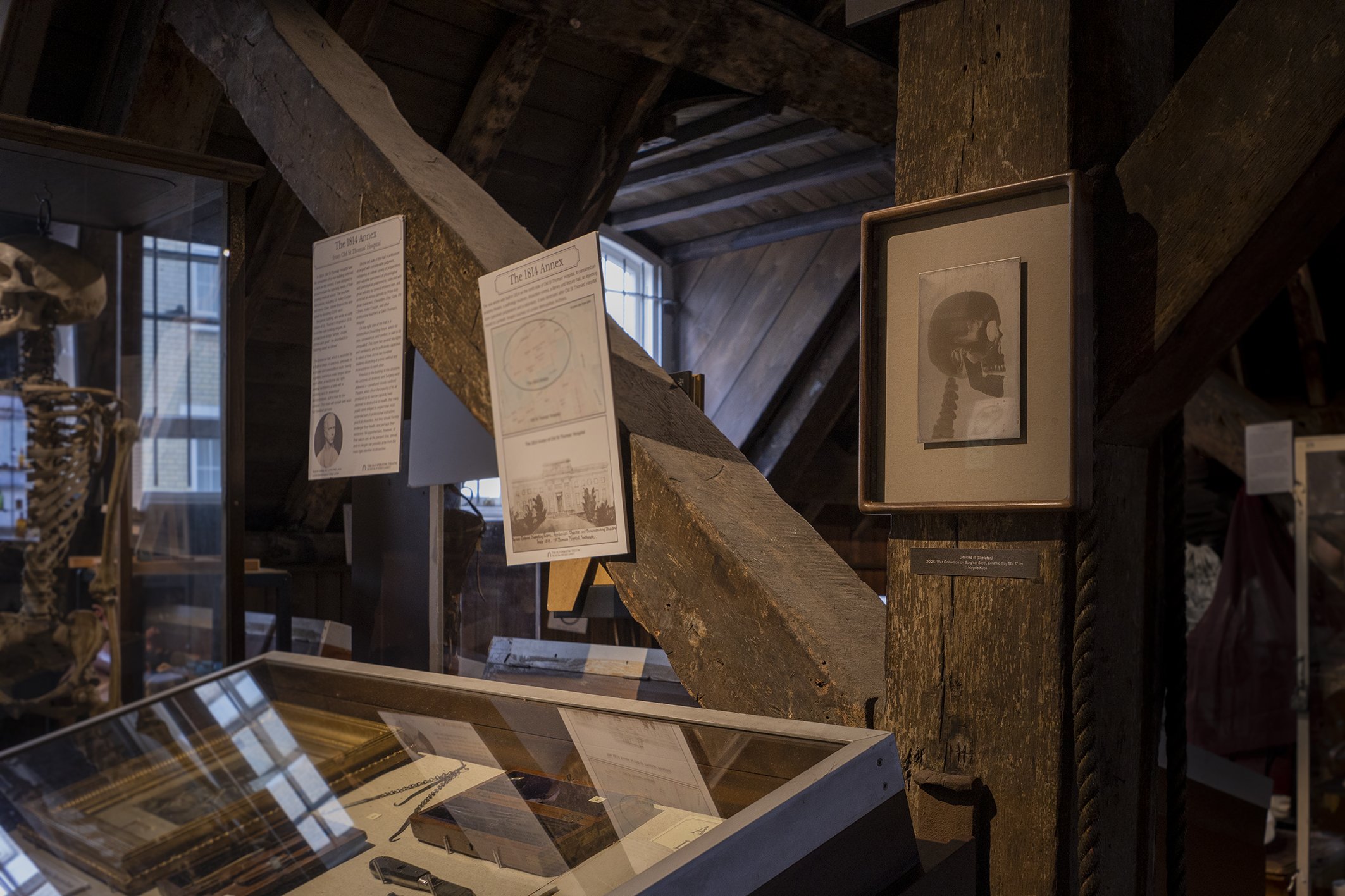
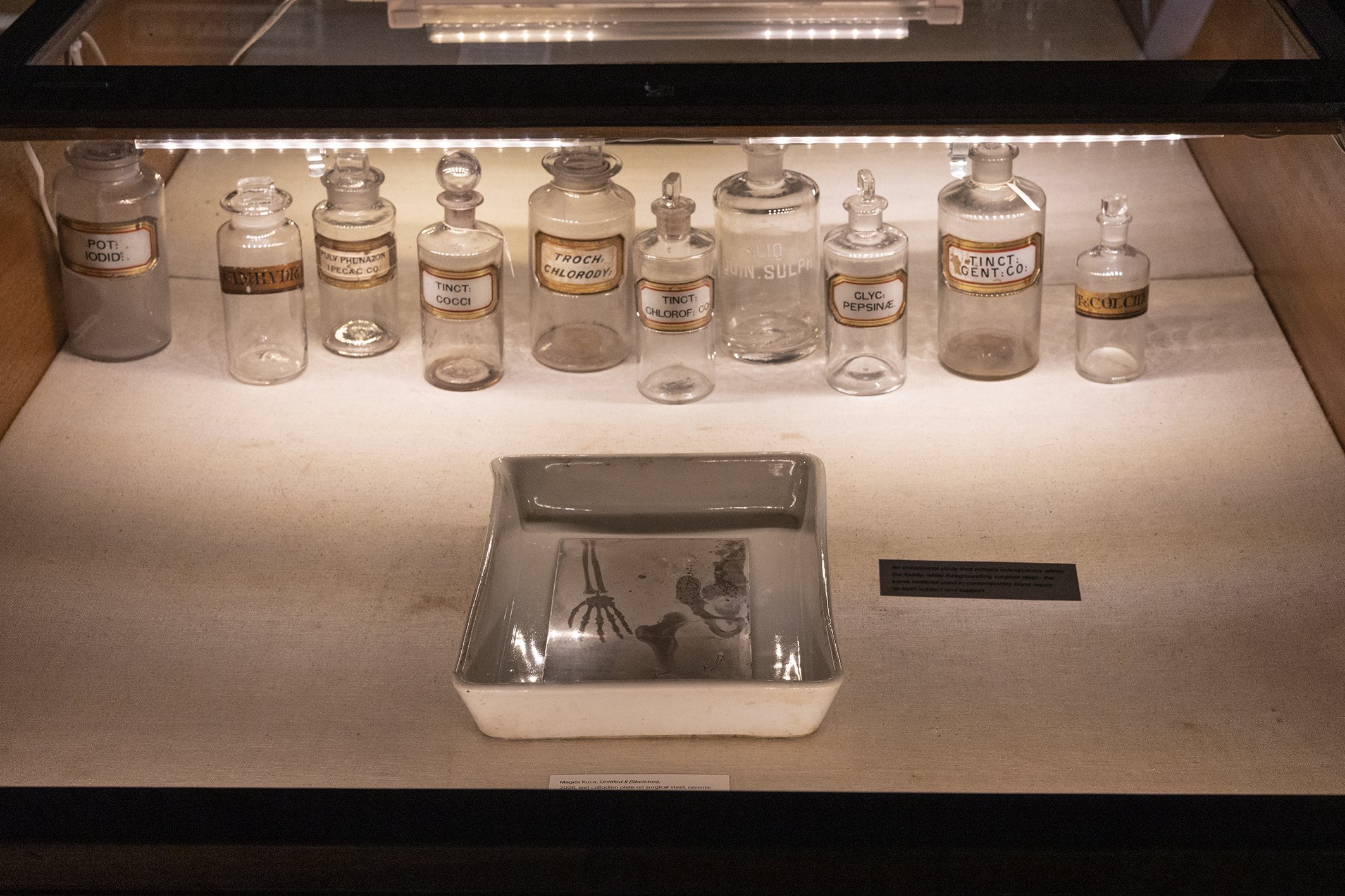
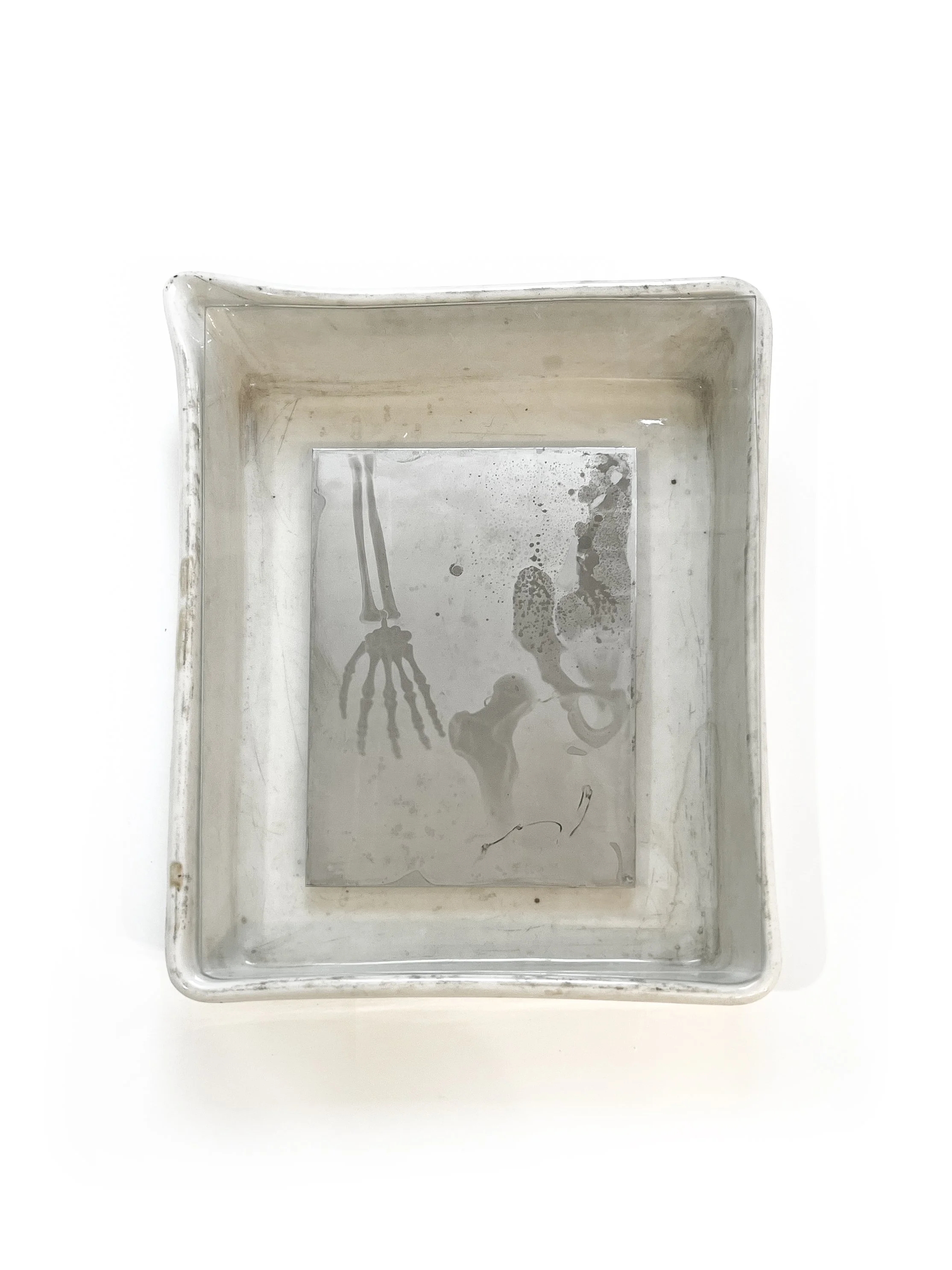
An anatomical study that echoes osteoporosis with- in the family, while foregrounding surgical steel - the same material used in contemporary bone repair - as both subject and support.
Untitled I (Skeleton), 2026, wet collodion plate on sur- gical steel, ceramic tray, 13x17 cm
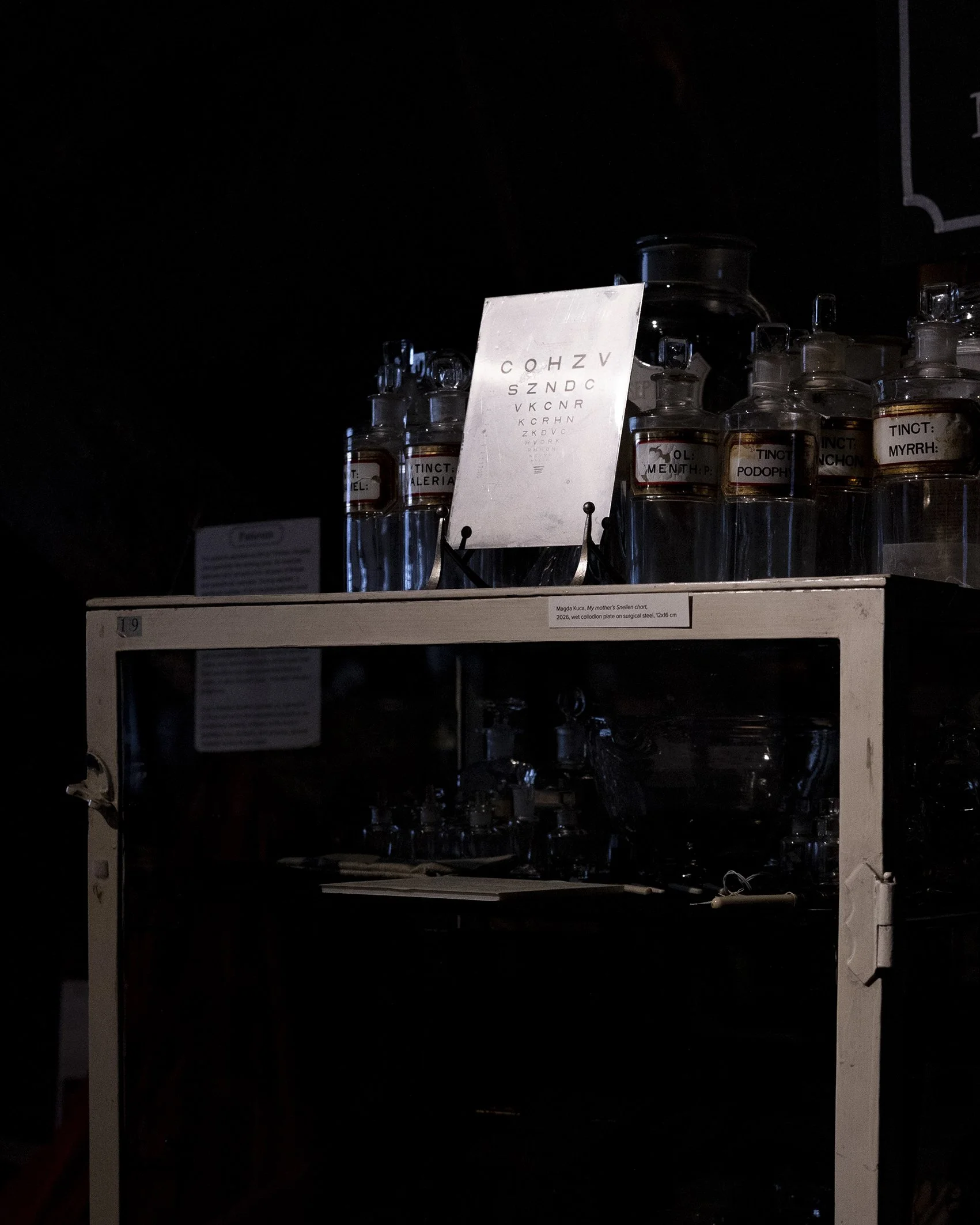
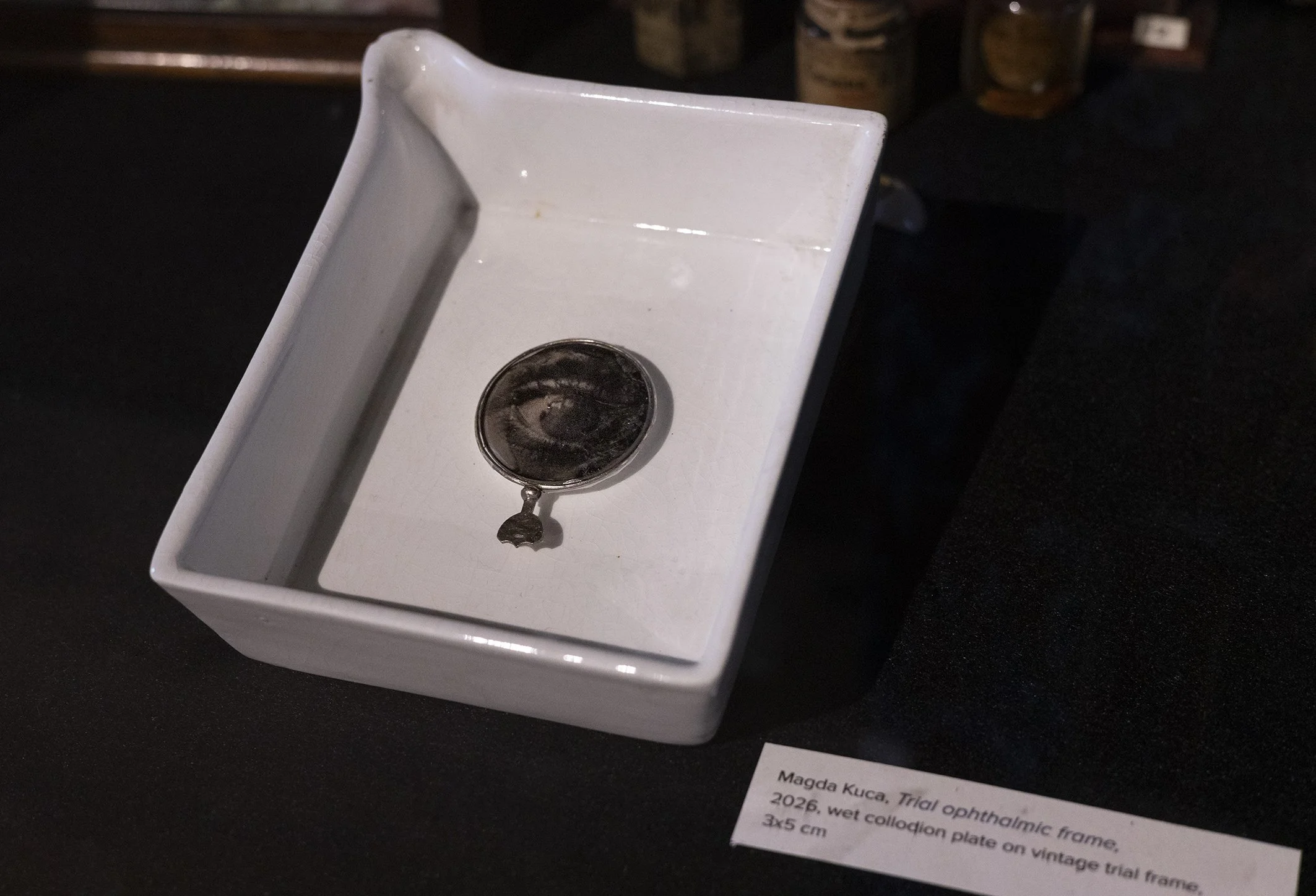
In the cabinets at the back of the Herb Garret you see still lifes with plague doctor masks, and references to the herbs and healing plants connected to the Garret. I am very drawn to this connection between medicine and ritual. Healing was often connected to plants, belief, and sometimes superstition. In Polish folklore, herbs are used for protection, healing, mourning and traditionally are a part of women’s inherited knowledge. My mym used cabbage leaf for migraines and treated coughs with onion syrup and she still continues to do that paralel to her medical education. So this space felt like a bridge between the many worlds I work in: the scientific and the spiritual, the medical and the folkloric, the historic and the deeply personal one. In the face of illness, you want all forms of protection - the doctor, the treatment, the radiographic scan. But you also want the herbs, the gesture, the old story, you want the smell of sage to cleanse and protect you. It is a space between the scientific and the miraculous.
Opening Event May 2026
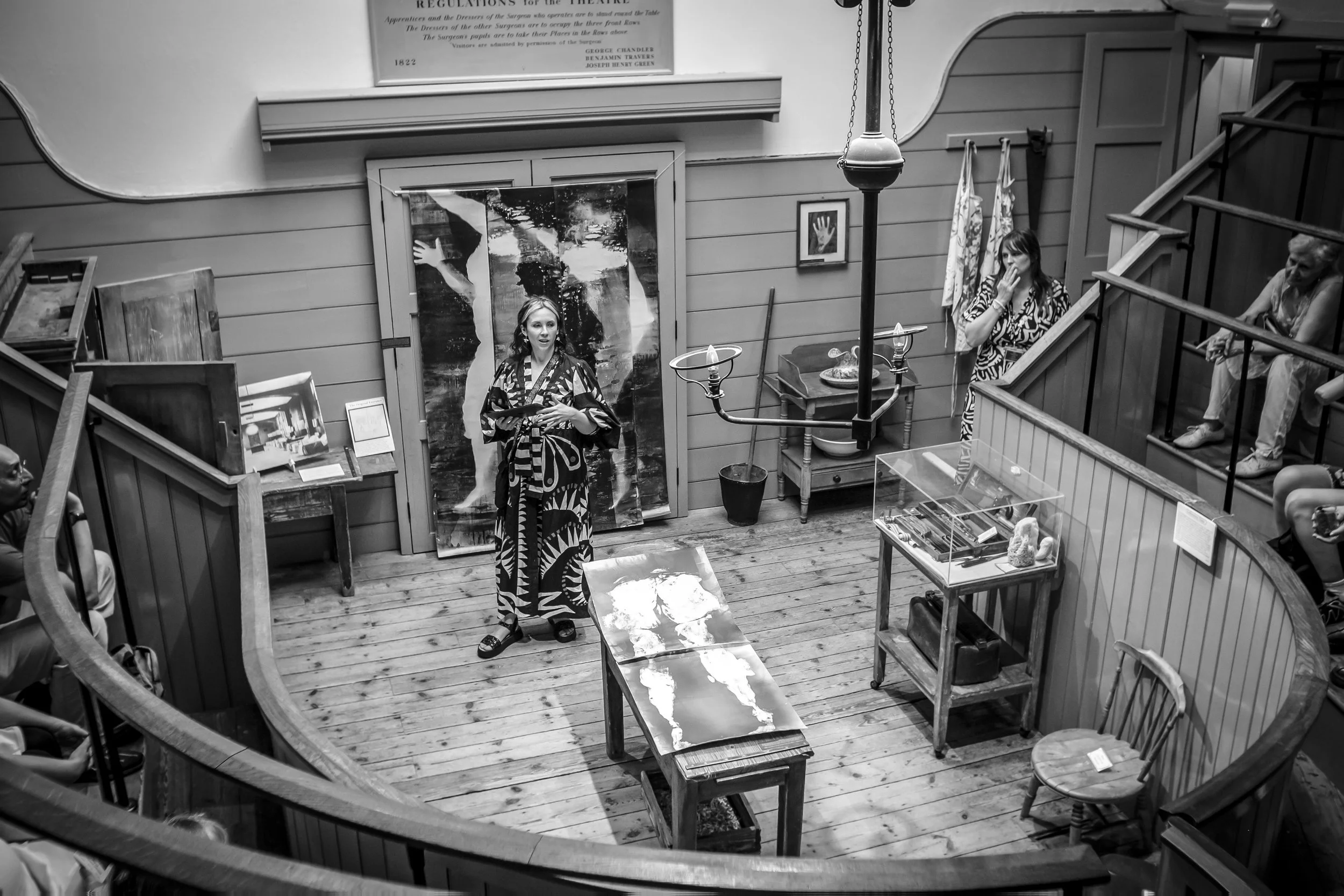
Project was supported by Centre for British Photography Realisation Grant, Museum of Anaesthesia and Old Operating Theatre
The Old Operating Theatre Museum and Herb Garret is one of London's most remarkable surviving medical heritage sites, offering a rare insight into the practice of healthcare before the advent of modern surgery and anaesthesia.
The Museum is housed within the roof space of St Thomas' Church, which opened in 1703 and remains the oldest surviving structure from St Thomas' Hospital's original Southwark site. During the eighteenth century, this attic space was used as the hospital's herb garret.
In 1822, the space was adapted to meet the growing demands of hospital care and was converted into a women's operating theatre, directly connected to the neighbouring Dorcas Ward. Surgical procedures were carried out here in full view of medical students.
The church roof space was vacated in 1862 and boarded up until being rediscovered in 1956. Since 1962, it has operated as an independent museum.
Today, the Old Operating Theatre Museum and Herb Garret continues to explore the history of surgery, medicine, and healthcare through its collections, exhibitions, and education programmes.